




¡Transformamos los prodigios de hoy en íconos del mañana!



A Tactical Evolution Rather Than a Rebuild
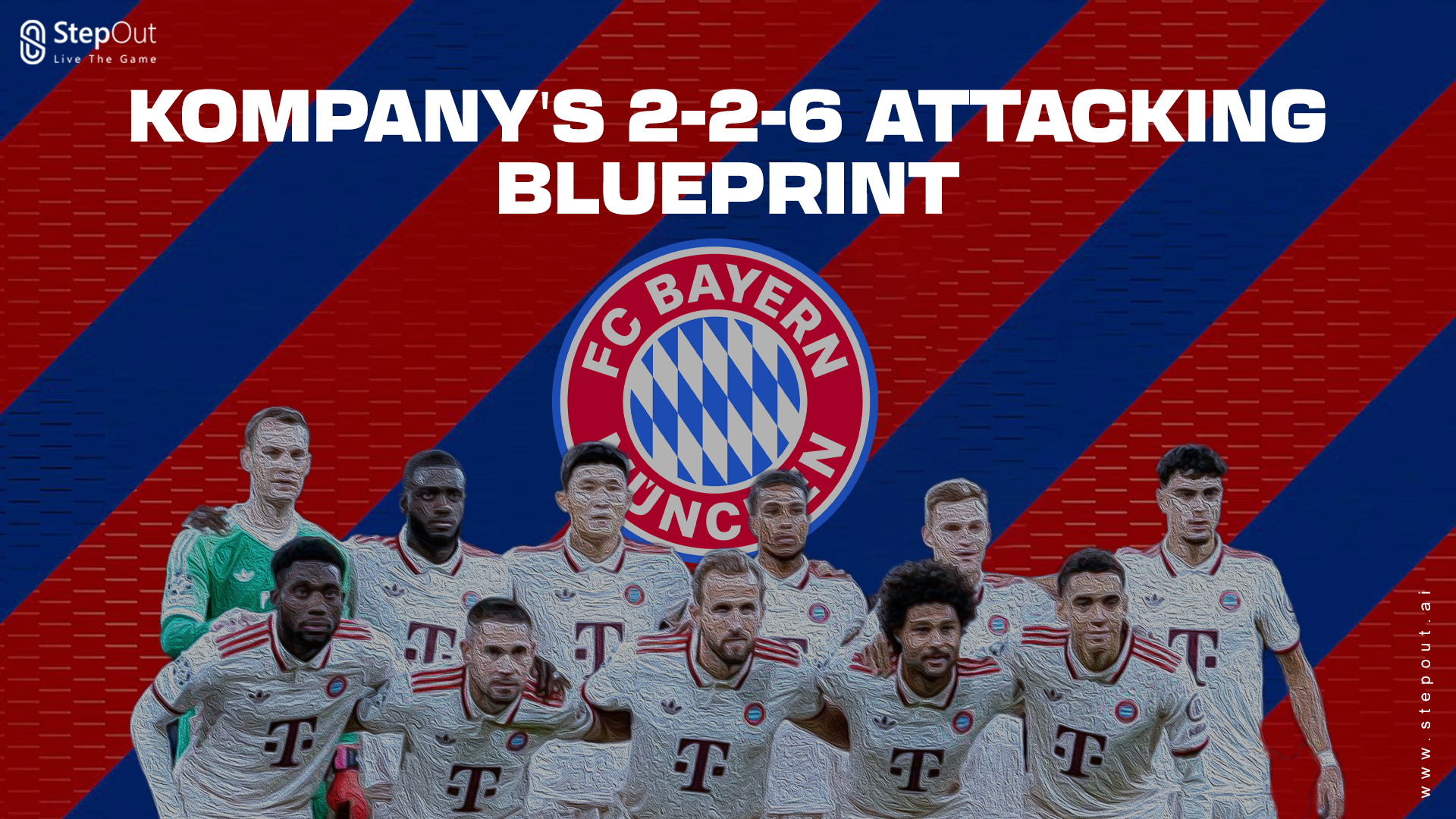
Vincent Kompany did not arrive in Munich to dismantle Bayern’s identity, but to sharpen it. His Bayern side retains the club’s traditional dominance while adding greater verticality, intensity, and freedom of movement. The result is a team that leads the league in goals scored while also conceding the fewest, proving that attacking ambition does not require defensive compromise. This balance is the foundation of Bayern’s dominance and the starting point of Kompany’s tactical imprint.

The Shape That Defines Kompany’s Bayern
Although Bayern are listed in a 4-2-3-1, their true identity emerges in possession, where the structure transforms into an aggressive 2-2-6. Two centre-backs hold the rest defence, two midfielders secure control behind the attack, and six players occupy every vertical and horizontal lane in the final third. This shape overwhelms modern low blocks and back-five systems by creating constant numerical superiority, forcing opponents to defend space rather than players.
Creating Space Through Movement, Not Positions
At the heart of this system is the idea that space matters more than position. Harry Kane’s role perfectly illustrates this principle, as he frequently drops into midfield to manipulate defensive lines. If centre-backs follow, space opens behind for runners; if they hold, Bayern dominate the centre. Kompany’s Bayern consistently generate advantages by forcing defenders into impossible decisions, using rotations and positional exchanges to stretch compact defensive structures.
Build-Up Play as a Tool for Attacking Control
Bayern’s attacking threat begins deep, with build-up designed to invite pressure rather than avoid it. Manuel Neuer’s advanced positioning creates an extra passing option, while centre-backs split wide to open central lanes. Joshua Kimmich often drops into the defensive line, stabilising possession and drawing opponents forward. This controlled risk allows Bayern to progress the ball cleanly while preparing the structure for immediate attacking overloads once the press is broken.
The 2-2 Core and Central Dominance
Beyond the first phase, Bayern settle into a 2-2 core that defines their control of the match. Kimmich dictates tempo as a deep organiser, while midfield partners push higher into half-spaces and attacking zones. Constant rotation within this core creates central overloads, allowing Bayern to circulate quickly before accelerating into the final third. This structure enables rapid transitions from possession to penetration while maintaining balance against counter-attacks.
Final-Third Overloads and Relentless Pressure
In the attacking third, Bayern fully commit to numerical dominance. Wingers stretch the pitch before drifting inside, full-backs provide overlapping and inverted support, and midfielders arrive late into the box. Kane alternates between linking play and finishing moves, ensuring the penalty area is consistently occupied by multiple runners. This sustained pressure explains Bayern’s league-leading shot volume and their ability to create high-quality chances from cutbacks, crosses, and second balls.
Defence That Exists to Sustain the Attack
Bayern’s defensive principles are designed to serve their attacking intent. A high defensive line compresses space, while immediate counter-pressing after possession loss prevents opponents from escaping pressure. By winning the ball back in advanced areas, Bayern turn defensive actions into attacking opportunities, often with six players already positioned high. In Kompany’s system, defence is proactive and aggressive, ensuring control even without the ball.
What Kompany’s Bayern Reveal — and Why StepOut Matters
Kompany’s Bayern demonstrate that modern football is no longer about rigid formations, but about understanding space, timing, and numerical advantage. Systems like the 2-2-6 demand precise analysis of movement patterns, overloads, and transitions rather than static positions or surface-level statistics. This is where tools like StepOut become essential, translating complex tactical behaviour into clear, actionable insights. As teams search for solutions to Bayern’s dominance, the ability to analyse structure, rotations, and spatial control will define the next edge in elite football.

Access in-depth performance data, tactical intelligence, and AI-driven match insights for your team.