




Transforming today's prodigies into tomorrow's icons!


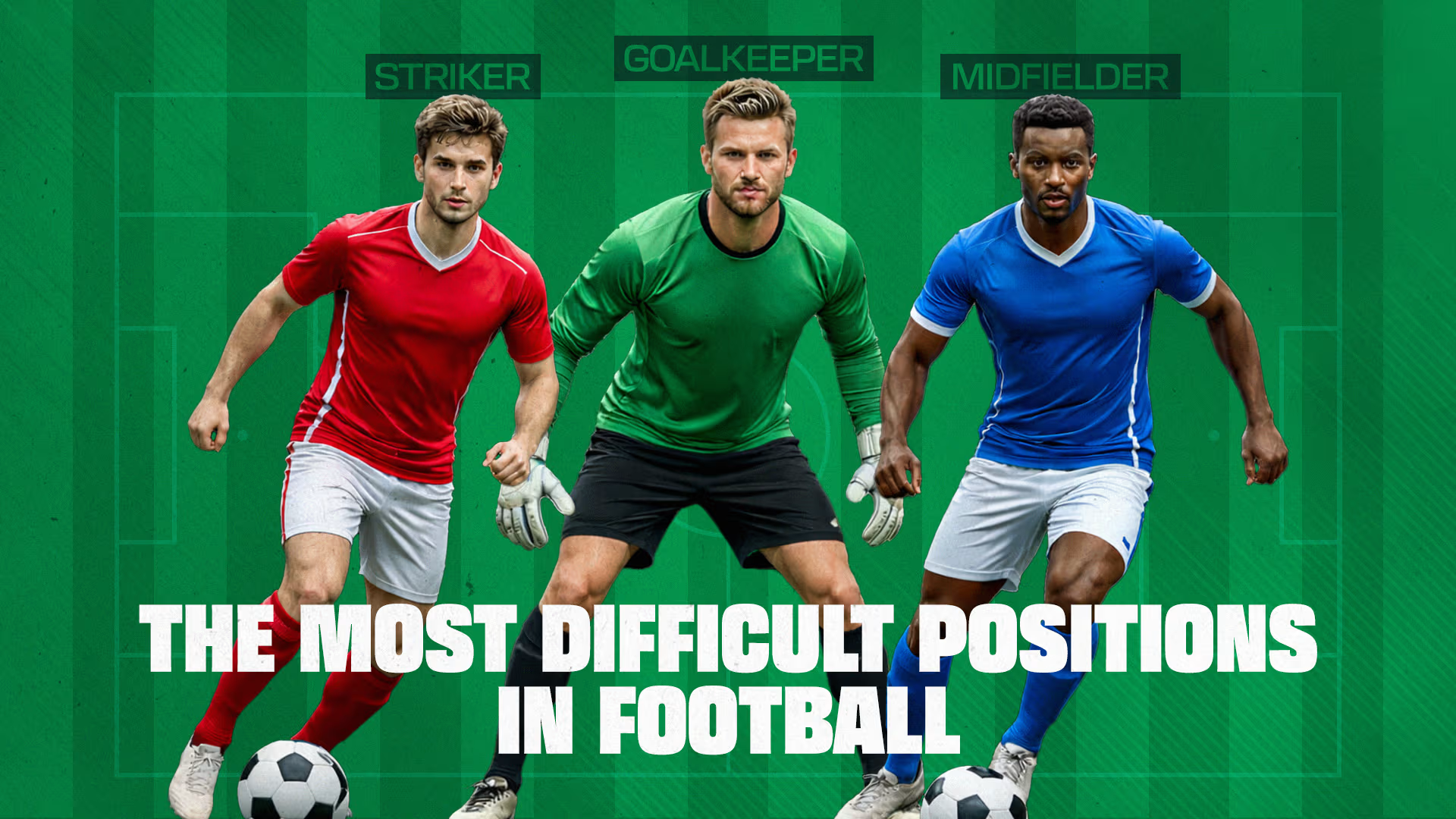
Striker
At first glance, the striker’s role seems straightforward: score goals. In reality, that simplicity is exactly what makes the position so demanding. Strikers are judged more harshly than any other player on the pitch, often based on one or two moments per match. At elite level, a striker may have fewer than 40 touches in 90 minutes, yet a single missed chance can overshadow everything else. Players like Robert Lewandowski, who scored over 40 goals in a single season for Bayern Munich and now Barcelona, or Erling Haaland, who broke the Premier League scoring record in his debut campaign, highlight the level of consistency required. Strikers must constantly battle centre-backs, time their runs perfectly, adapt to different defensive systems, and remain mentally sharp even when isolated for long periods. The pressure to deliver goals week in week out makes this one of football’s toughest jobs.

Central attacking midfielder
The central attacking midfielder, often referred to as the No.10, is the creative heartbeat of the team. This role requires exceptional technical quality, vision, and decision-making in tight spaces. Modern football has made the position even harder, as attacking midfielders are now expected to contribute defensively through pressing and counter-pressing. Players like Lionel Messi in his early Barcelona years, Kevin De Bruyne at Manchester City, and Mesut Ozil during his peak seasons were responsible for creating chances while constantly being targeted by opposition midfielders. Statistically, elite No.10s often lead their teams in key passes and chances created, while also covering significant ground. The difficulty lies in balancing creativity with discipline and producing decisive moments under intense pressure.
Wing-backs
The wing-back position has evolved into one of the most physically demanding roles in modern football. Wing-backs are required to provide width in attack, deliver crosses, track opposition wingers, and recover defensively, often along the entire length of the pitch. Match data from UEFA competitions regularly shows wing-backs among the players who cover the most distance, frequently exceeding 11 kilometres per game. Players like Achraf Hakimi, Alphonso Davies, and Trent Alexander-Arnold redefined the role with their attacking output, contributing goals and assists while still being responsible defensively. The challenge lies in timing runs, managing energy levels, and making constant tactical decisions about when to push forward and when to stay back. Few positions demand such sustained physical and mental effort.
Defensive midfielder
The defensive midfielder, or No.6, is often described as the most important yet least glamorous position on the pitch. This role requires elite tactical awareness, positional discipline, and technical mastery under pressure. Defensive midfielders act as the link between defence and attack, responsible for breaking up opposition play and initiating build-up phases. Players like Rodri and Joshua Kimmich, and previously Sergio Busquets consistently rank among the top players in interceptions, passes completed, and touches per game. A small positional mistake can expose the defence and lead directly to a goal, which makes decision-making crucial. The position also demands constant scanning of space and opponents, much of it done without the ball, making it mentally exhausting over the course of a match.
Goalkeeper
The goalkeeper is, to a large extent, the hardest position to play in football. No other role carries such immediate and visible consequences for mistakes. A single error almost always results in a goal, and there is no teammate behind to recover the situation. Modern goalkeepers are expected to be far more than shot-stoppers. They must play out from the back, act as an extra defender, and initiate attacks with accurate passing. Elite goalkeepers like Manuel Neuer, Alisson Becker, and Ederson regularly rank among their team’s most involved players in possession, while still being called upon to make decisive saves. Goalkeepers may go long periods without action, only to face high-pressure moments that define matches, requiring exceptional concentration and mental resilience. Psychologically and technically, no position demands more.
Evolving roles in an evolving sport
Every position in football is difficult at the highest level, but these five stand apart because of the unique blend of physical strain, mental pressure, and technical excellence required. From the striker’s burden of goals to the goalkeeper’s unforgiving margin for error, these roles are defined by what is at stake in every action. Football’s hardest positions are not just about effort or skill, but about handling responsibility when the game is on the line.
Access in-depth performance data, tactical intelligence, and AI-driven match insights for your team.
