StepOut
Blogs

Football Knowledge at the Edge

Football Knowledge at the Edge

Tactical analysis, AI in football, scouting intelligence, and performance analytics from the StepOut research team.

FIFA World Cup 2026 Group Stage
World Cup

FIFA World Cup 2026 Group Stage

The 2026 FIFA World Cup group stage is unlike any that has come before it. The expansion from 32 to 48 teams introduced twelve groups of four, a Round of 32 knockout stage, and a best-third-placed-teams mechanism that fundamentally rewrites how tournament qualification logic works. For teams, coaches, and analysts, the new format creates tactical and physical challenges that go beyond simply adding more matches. Squad rotation is now structurally obligatory rather than tactically optional. Third-place positioning has become a live strategy rather than a consolation bracket. The group stage runs from June 11 to June 27, 2026, across sixteen host cities in the United States, Canada, and Mexico. This is the complete breakdown of how it works, what the rules are, and what the structural changes mean for competitive football.

FIFA World Cup 2026 Group Stage Draw
World Cup

FIFA World Cup 2026 Group Stage Draw

The draw for the 2026 FIFA World Cup took place on December 5, 2025, at the Kennedy Center in Washington D.C. — and with it, the 48-team era moved from concept to concrete reality. Twelve groups, 104 matches, three host nations, and a round-of-32 format that fundamentally rewrites tournament survival calculus. The full group composition was confirmed by April 1, 2026, following the resolution of the UEFA and inter-confederation playoffs. This is not a standard World Cup draw analysis. What follows is a group-by-group breakdown built around tactical identity, squad construction, competitive balance, and the underlying performance data that determines who really has a path through — and who faces a structural elimination before June 27.

CONCACAF World Cup 2026 Qualifiers
World Cup

CONCACAF World Cup 2026 Qualifiers

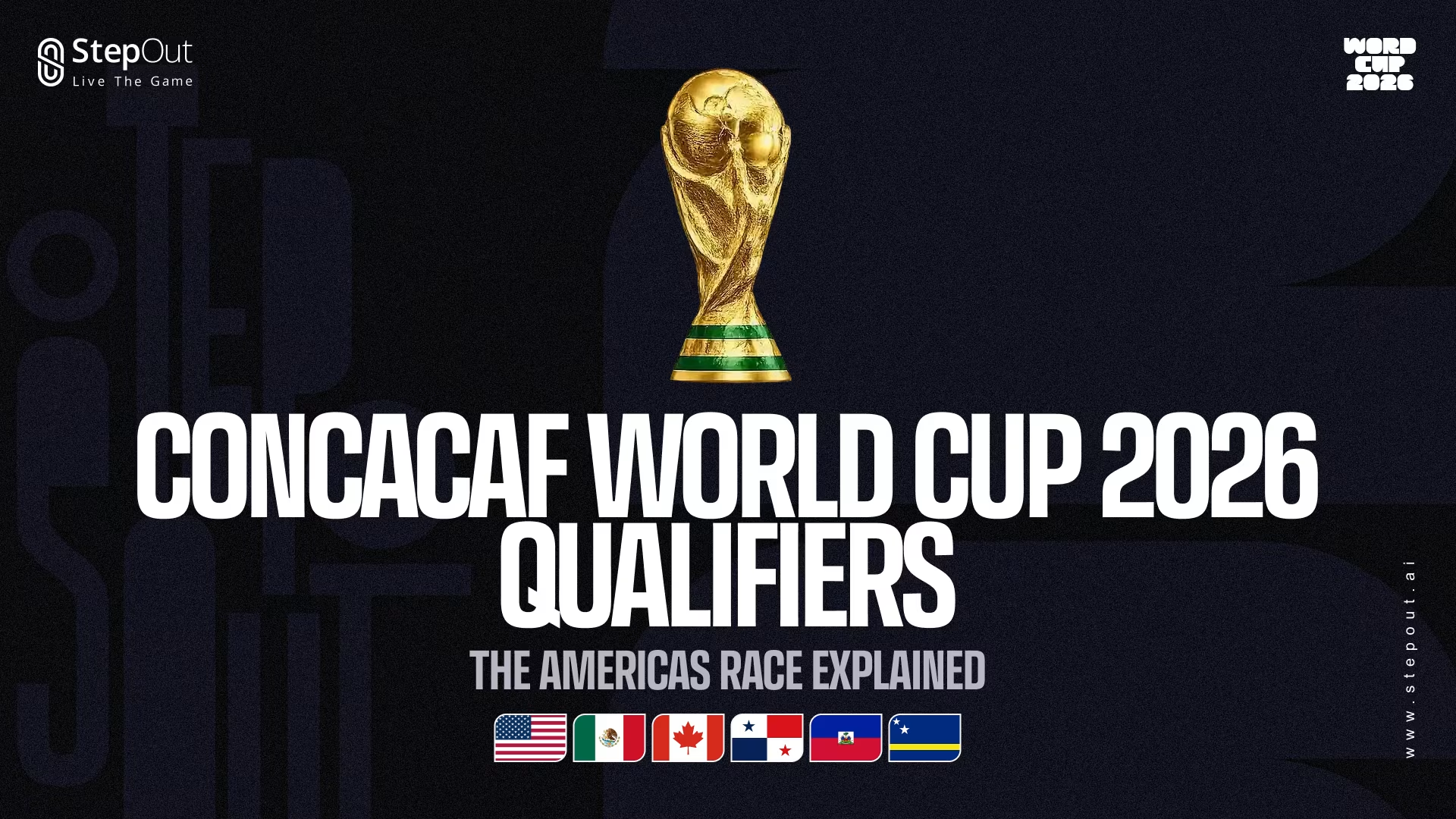
CONCACAF's qualification campaign for the 2026 FIFA World Cup operated under a structural constraint that transformed the entire process: Canada, Mexico, and the United States had already qualified as co-hosts. With three of the confederation's six allocated slots absorbed before a single qualifier was played, only three direct World Cup spots were available through competition — the most tightly contested distribution in CONCACAF qualification history. Thirty-two nations entered the race from March 2024. Curaçao, Haiti, and Panama emerged as the three direct qualifiers. Jamaica and Suriname extended their campaigns into the inter-confederation playoff. This is the full account of how CONCACAF got to its 2026 field, what the results mean tactically, and why this qualification cycle was as significant for regional football development as any result the campaign produced.

FIFA's Six Confederations
World Cup

FIFA's Six Confederations

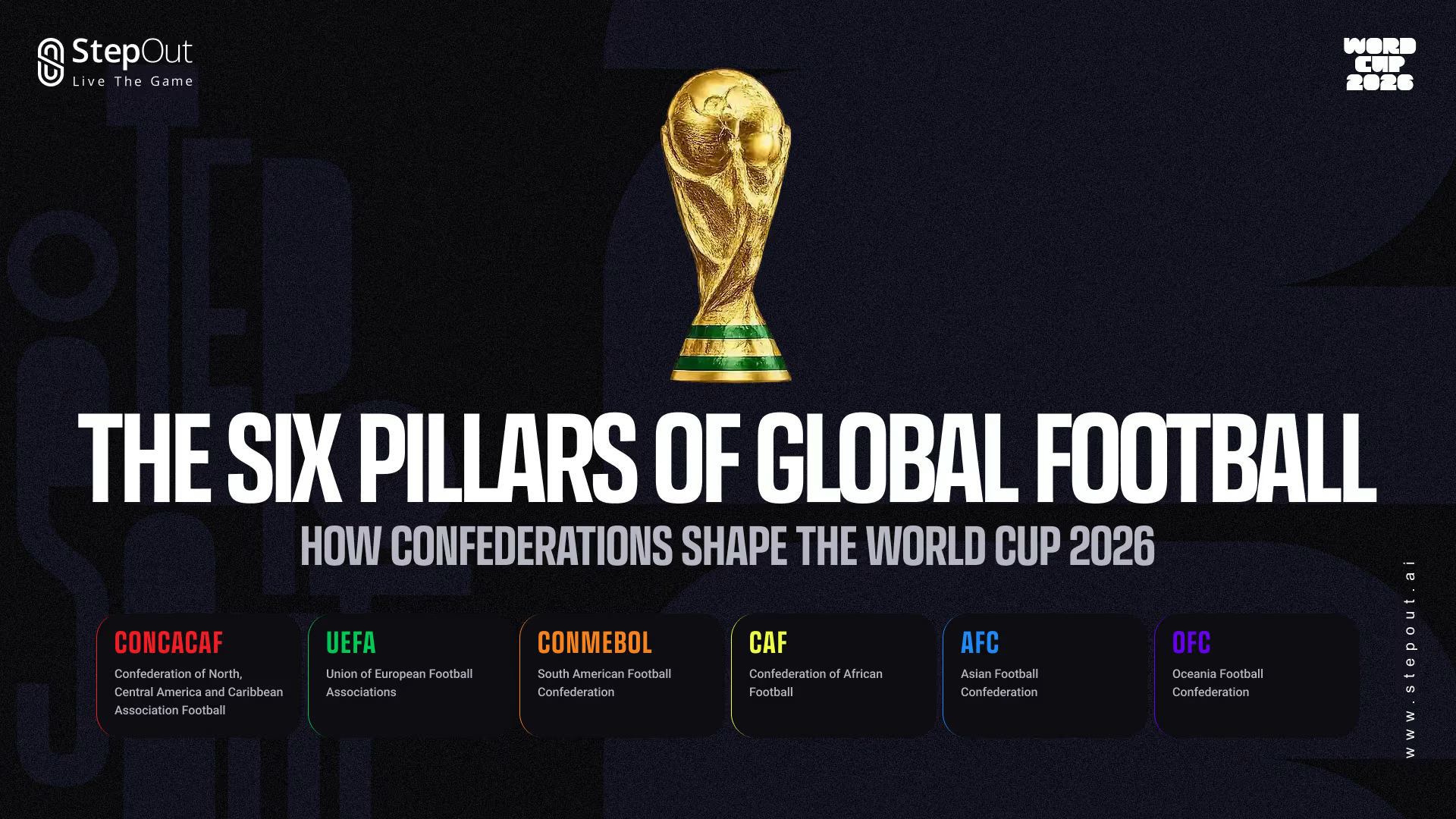
Global football does not run through FIFA alone. Between the governing body and its 211 member associations sit six regional confederations — UEFA, CONMEBOL, CONCACAF, CAF, AFC, and OFC — each responsible for their own qualification systems, domestic competitions, development programmes, and football identity. These six bodies collectively determine who reaches the World Cup, how much of the game's revenue flows to which regions, and what the long-term competitive trajectory of world football looks like. The expansion to 48 teams in 2026 changed the slot allocation meaningfully for most of them. Understanding each confederation — structurally, tactically, and developmentally — is essential to understanding why this World Cup looks the way it does.

CAF World Cup 2026 Qualifiers
World Cup

CAF World Cup 2026 Qualifiers

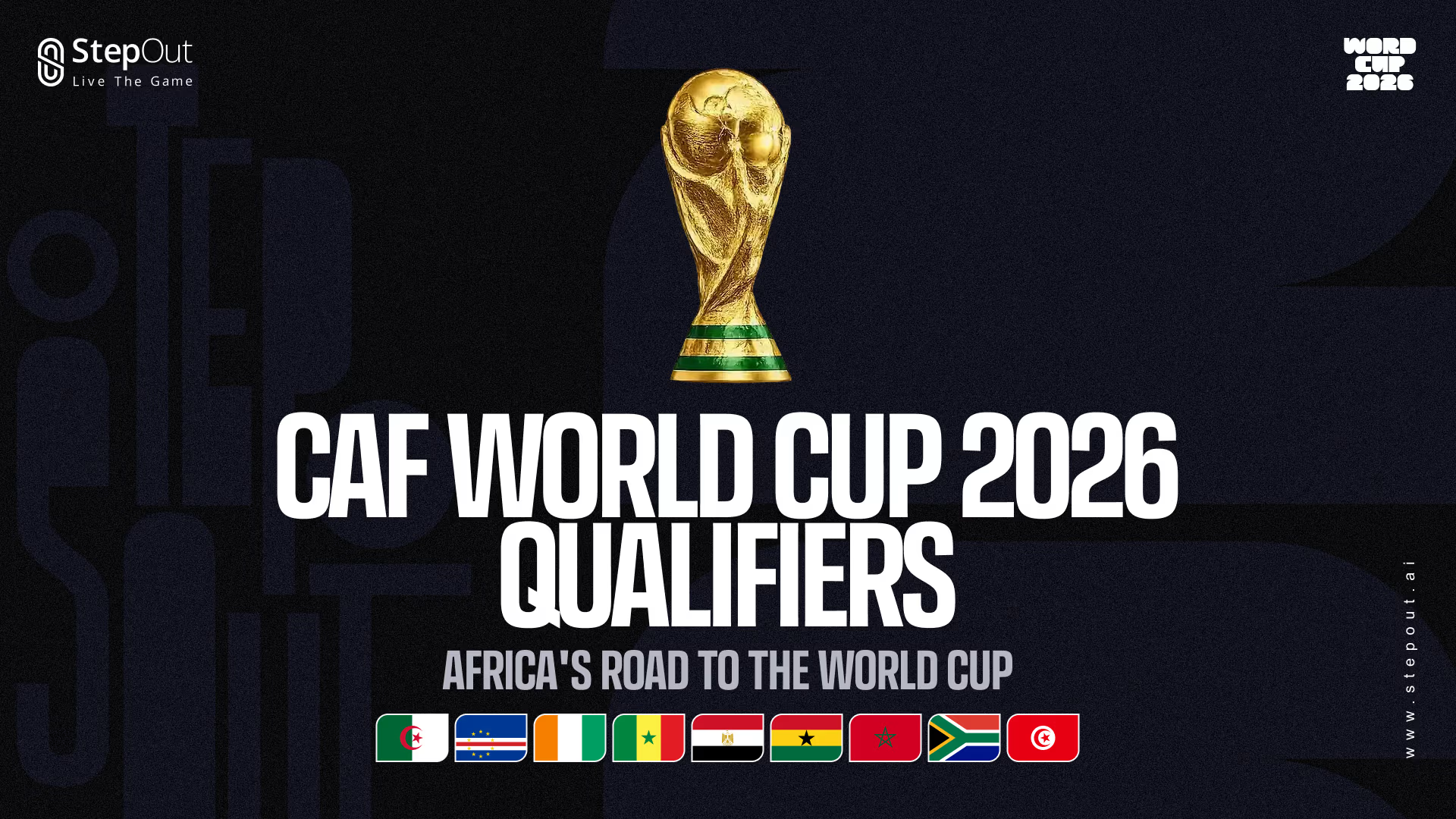
Africa entered the 2026 FIFA World Cup qualification cycle with a record nine direct slots — nearly double the five allocated for Qatar 2022. Fifty-four nations competed across nine groups of six teams, with each group winner earning automatic qualification and the four best runners-up advancing to a CAF playoff stage. The campaign ran from November 2023 through October 2025, with the playoff resolving in November. The nine direct qualifiers were Morocco, Senegal, Egypt, Algeria, Ghana, Ivory Coast, South Africa, Tunisia, and Cape Verde. DR Congo took the inter-confederation playoff route and ultimately qualified — potentially making Africa's total ten nations at the tournament. Nigeria and Cameroon, two of the continent's historically dominant forces, did not qualify. This is the full analytical account of Africa's road to the World Cup.

…

Curious How This Would Work?

Access in-depth performance data, tactical intelligence, and AI-driven match insights for your team.

WhatsApp