
The best football clubs of all time
Clubs That Shaped Football
Real Madrid: The ‘kings’ of Europe
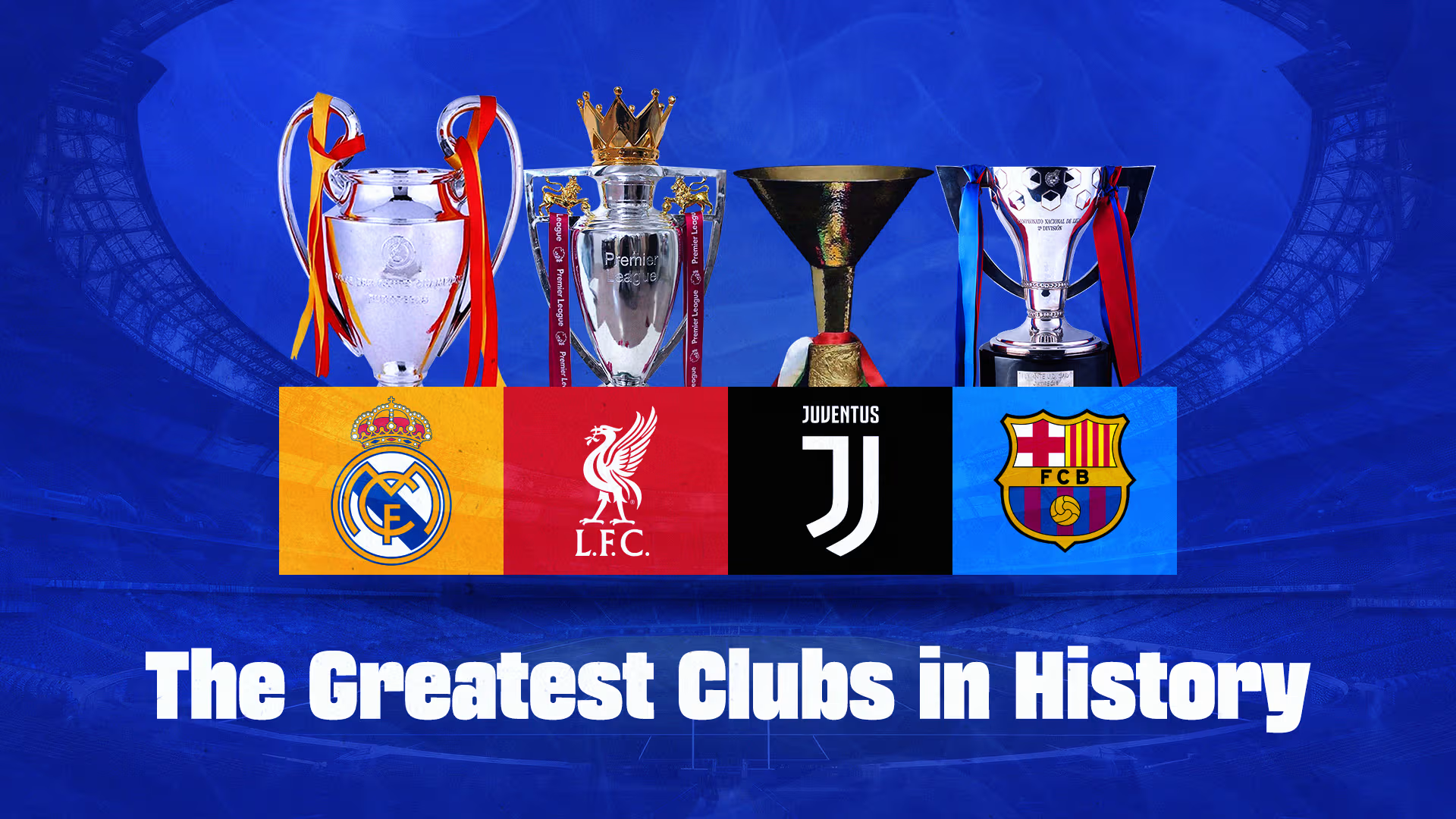
When it comes to sustained success, no club on the planet rivals Real Madrid. Their record-breaking 15 European Cup and Champions League titles more than double the total of the next best team, and their 36 La Liga trophies tower over domestic rivals. Real have long built their legacy by attracting the greatest talent in world football—from Alfredo Di Stefano to the Galácticos era of Zidane, Ronaldo Nazário, Luis Figo, David Beckham and Roberto Carlos, and later Cristiano Ronaldo, Karim Benzema, Luka Modric, Toni Kroos and Gareth Bale. Even before the early 2000s superstar era, Real were a juggernaut, collecting 27 league titles and seven European Cups by the end of the 20th century. With eight Ballon d’Or winners collecting a combined 12 awards and the status of world’s most valuable sports team, their dynasty remains unmatched. Real Madrid are football’s ultimate benchmark.
Barcelona: The blueprint of beautiful football
To finish second and still carry a legacy as transformative as Barcelona’s says everything about their greatness. The Catalan club set a new standard for style and identity, building a philosophy rooted in possession, movement and intelligent teamwork, which was cemented by Johan Cruyff and later perfected under Pep Guardiola. Their academy, La Masia, remains the gold standard for youth development, producing the likes of Xavi Hernandez, Andres Iniesta, Sergio Busquets, Carles Puyol, Gerard Piqué, Victor Valdés, Jordi Alba and of course Lionel Messi, widely considered the greatest player ever. Barça have captured 28 La Liga titles and five European Cups, supported by record Copa del Rey success and a fan culture that values beauty as much as results. With modern stars cementing their spot in the side, such as Pedri, Gavi and Lamine Yamal, their legacy is far from complete.
Bayern Munich: German excellence
Consistency is Bayern Munich’s trademark. When one thinks of football in Germany, Bayern is unavoidable. Their dominance of the Bundesliga, boasting 33 league titles, including long stretches of absolute control, is unmatched in any major European league. Their six Champions League titles further cement their status within the global elite. Records follow them everywhere: 20 DFB-Pokal wins, Ballon d’Or legends like Franz Beckenbauer and Karl-Heinz Rummenigge, and a culture of relentless excellence. While the ‘limited’ domestic competition is often held against them, that only enhances Bayern’s aura, stressing the fact that they are the standard every German club must chase. Ruthless, efficient and elegant, Bayern belong firmly among the best ever.
Juventus: Italy’s Old Lady
Despite the controversies of Calciopoli, Juventus’ place among football’s greats is unshakeable. With 36 league titles, the club has 16 more than any other Italian side. It is safe to say they’ve stamped dominance and have owned Serie A for decades, even though recent trends point to a major shake-up. The Turin giants boast two European Cups and a record 15 Coppa Italia crowns, while legends such as Del Piero, Buffon, Platini, Baggio, Nedvěd and Zidane have defined eras wearing black and white.Their Ballon d’Or count of six award-winning players is tied for third-highest among clubs. Juventus are woven into Italian culture and history, commanding support and respect like few other teams. Dominance and durability make them eternal contenders in any ranking.
Liverpool: The heartbeat of English football
Few clubs carry the emotional weight and cultural presence of Liverpool. Dominating Europe and England during the 1970s and 80s, they built a dynasty that earned 11 league titles and four European Cups in that golden era. Their modern resurgence under Jurgen Klopp and then Arne Slot has added another Champions League title, two Premier League trophies, domestic cups and global silverware.With six European Cups, which is more than any English club, and 20 league titles shared with Manchester United, Liverpool’s record speaks for itself. Their history is a story of resilience and revival, and “You’ll Never Walk Alone” echoes through world football as an anthem of loyalty and belief.
Adding to the list of the elite
Just outside the top five are giants with their own remarkable legacies. Manchester United dominated global football in the 1990s and 2000s under Sir Alex Ferguson, winning 13 Premier League titles and two Champions Leagues. AC Milan’s seven European Cups and a long list of Ballon d’Or winners make them one of history’s most decorated teams. Ajax transformed football forever with Total Football, three straight European titles in the early 70s and an academy that shaped legends like Cruyff, Bergkamp and van Basten. Boca Juniors, backed by 52 domestic titles and six Copa Libertadores triumphs, remain an icon of South American passion. Palmeiras also deserve mention for their record 12 Brazilian league titles, Copa Libertadores success and a youth system producing stars like Endrick, to complete the bunch.
Unmatched legacy From Europe to South America, these clubs shaped football’s identity, built dynasties and produced the world’s most influential players. The debate will never end, as greatness can never be measured just in trophies. It is identity, emotion, culture and the stories that define generations.