


Transitioning Teams Between Generations
Football’s Evolution Game: Balancing Youth, Experience, and Legacy
Balancing Experience with Youth

Every successful transition begins with balance. Phasing out veterans isn’t about sudden exits—it’s about preserving their experience while nurturing young talent. These seasoned players offer leadership and game intelligence that can’t be taught in training.
Pairing them with energetic, hungry youth ensures continuity and growth. Think of Luka Modrić mentoring Jude Bellingham at Real Madrid—it’s a passing of the torch, ensuring the team’s DNA remains intact while evolving for the future.
The data supports this: clubs that blend youth with experience maintain a higher points-per-game ratio than those that make drastic overhauls. A 2018 CIES Football Observatory study found that teams with an average squad age between 25-27 years had the highest win percentages across Europe’s top five leagues.
Building Continuity Through Gradual Transitions
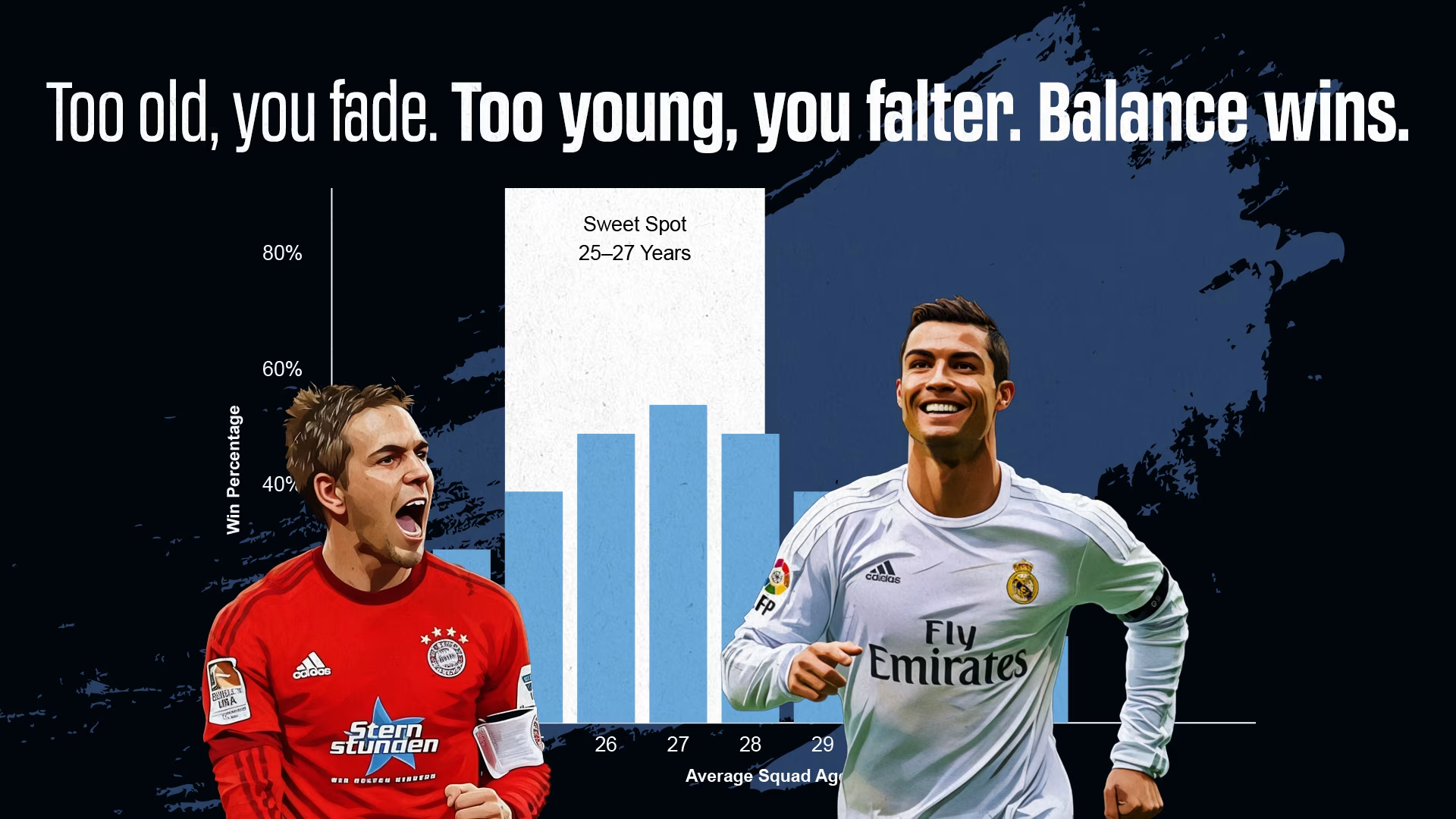
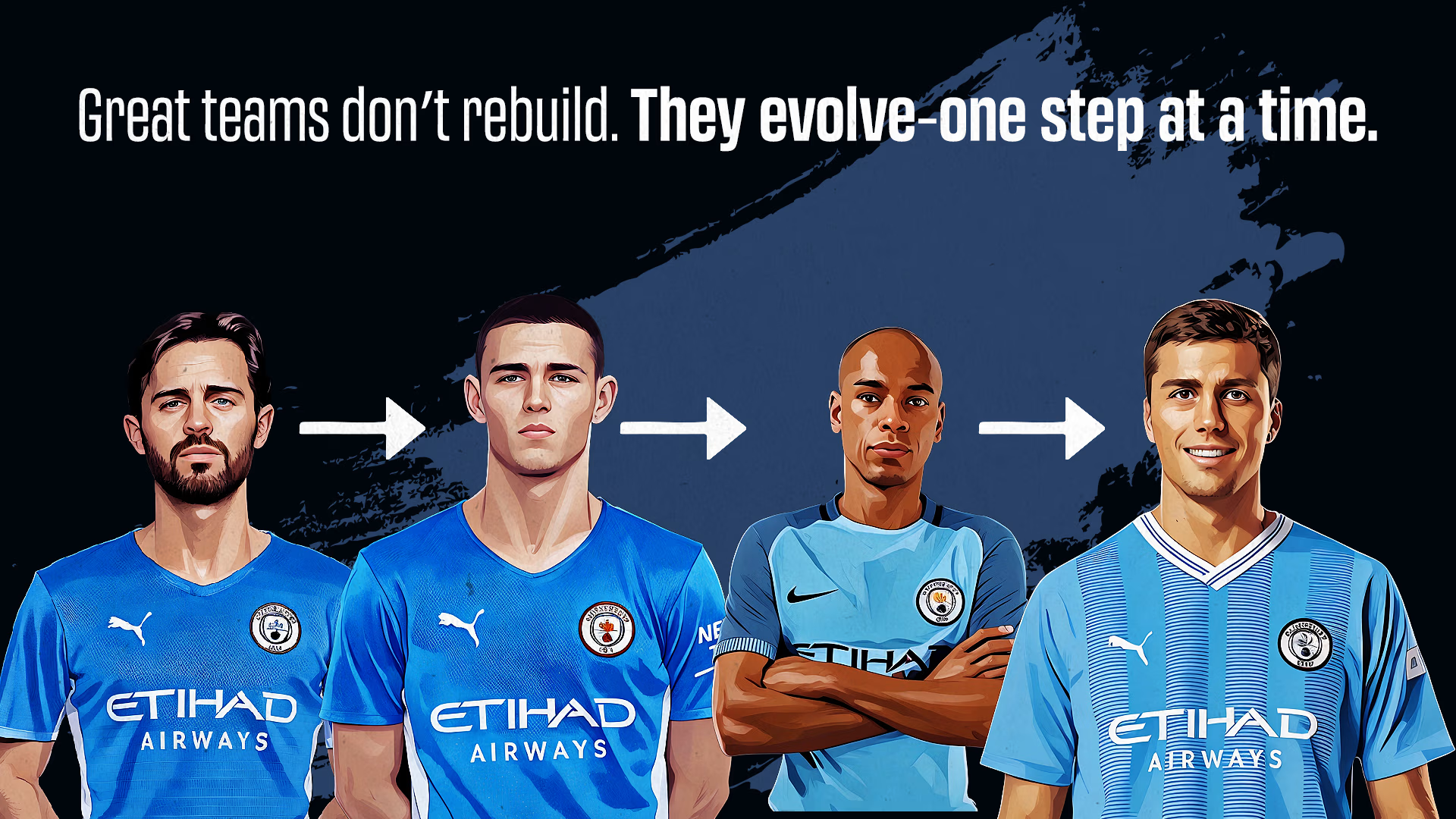
Great teams don’t rebuild overnight. They evolve.
Gradual transitions—like giving minutes to young players in less critical games or rotating veterans strategically—allow for a smooth handover. It’s not just about maintaining form; it’s about creating a culture where the team’s identity endures.
Take Manchester City under Guardiola—each year, a key player is replaced or phased out seamlessly. David Silva made way for Phil Foden. Fernandinho for Rodri. The team keeps winning because the changes are planned, not reactive.
Data from Opta highlights that teams introducing at least three U23 players per season into regular first-team football saw an increase in squad valuation by 22% on average over three years while maintaining performance levels.
Challenges of Transitioning Generations
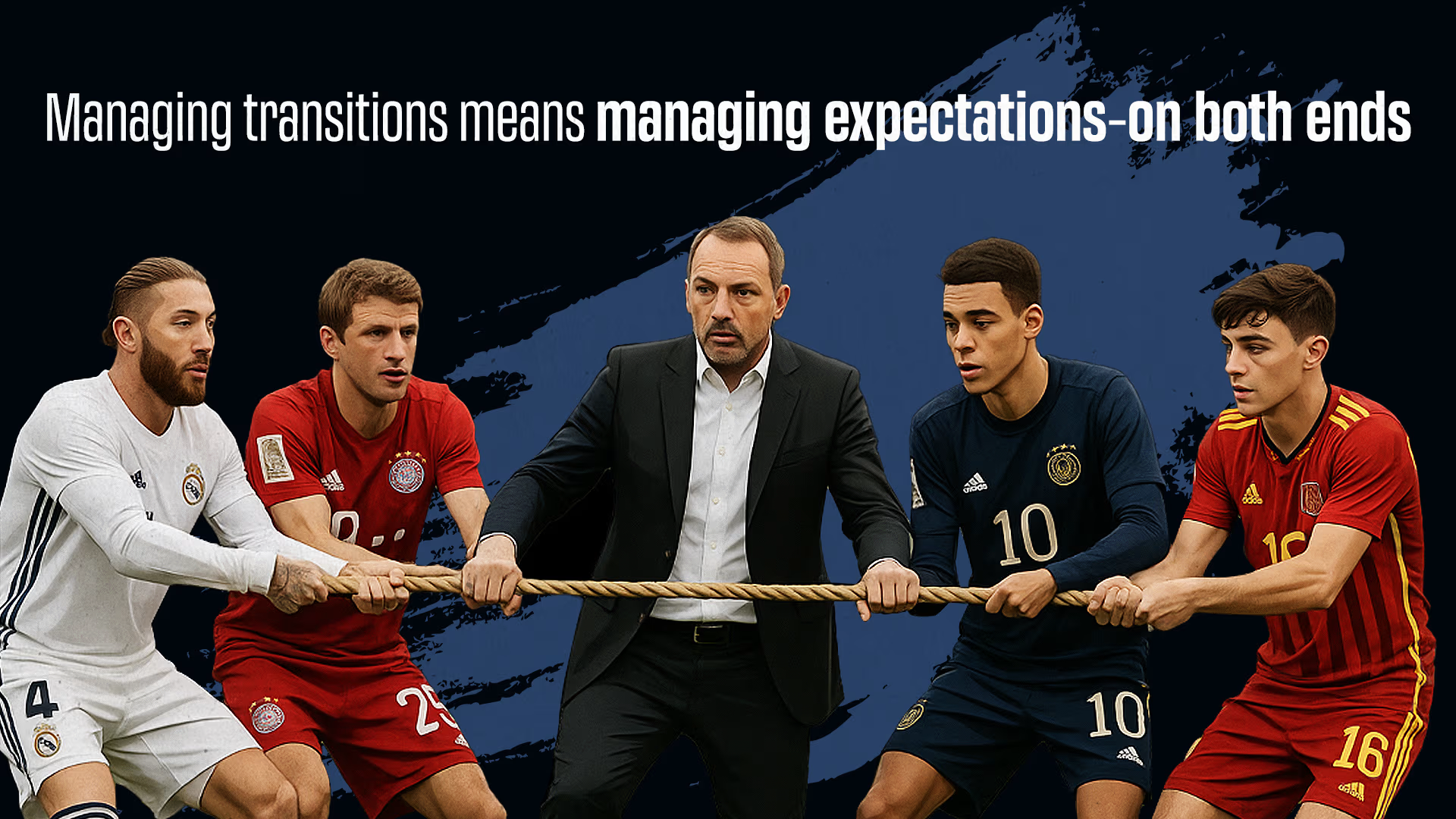
But transitions come with hurdles.
Morale can dip as veterans feel sidelined or young players struggle to meet expectations. Fans, too, demand instant results, making it difficult to phase out icons without backlash.
Clear communication is key. Players must understand their evolving roles, and managers need to instill confidence in the next generation. Sir Alex Ferguson’s Manchester United was a masterclass in transition—he replaced greats like Keane, Beckham, and Ronaldo without losing the club’s winning mentality.
However, according to a 2022 report by the CIES Football Observatory, only 32% of clubs in Europe's top leagues have a structured transition plan, often leading to inconsistent performances when key players leave.
Case Studies of Transition
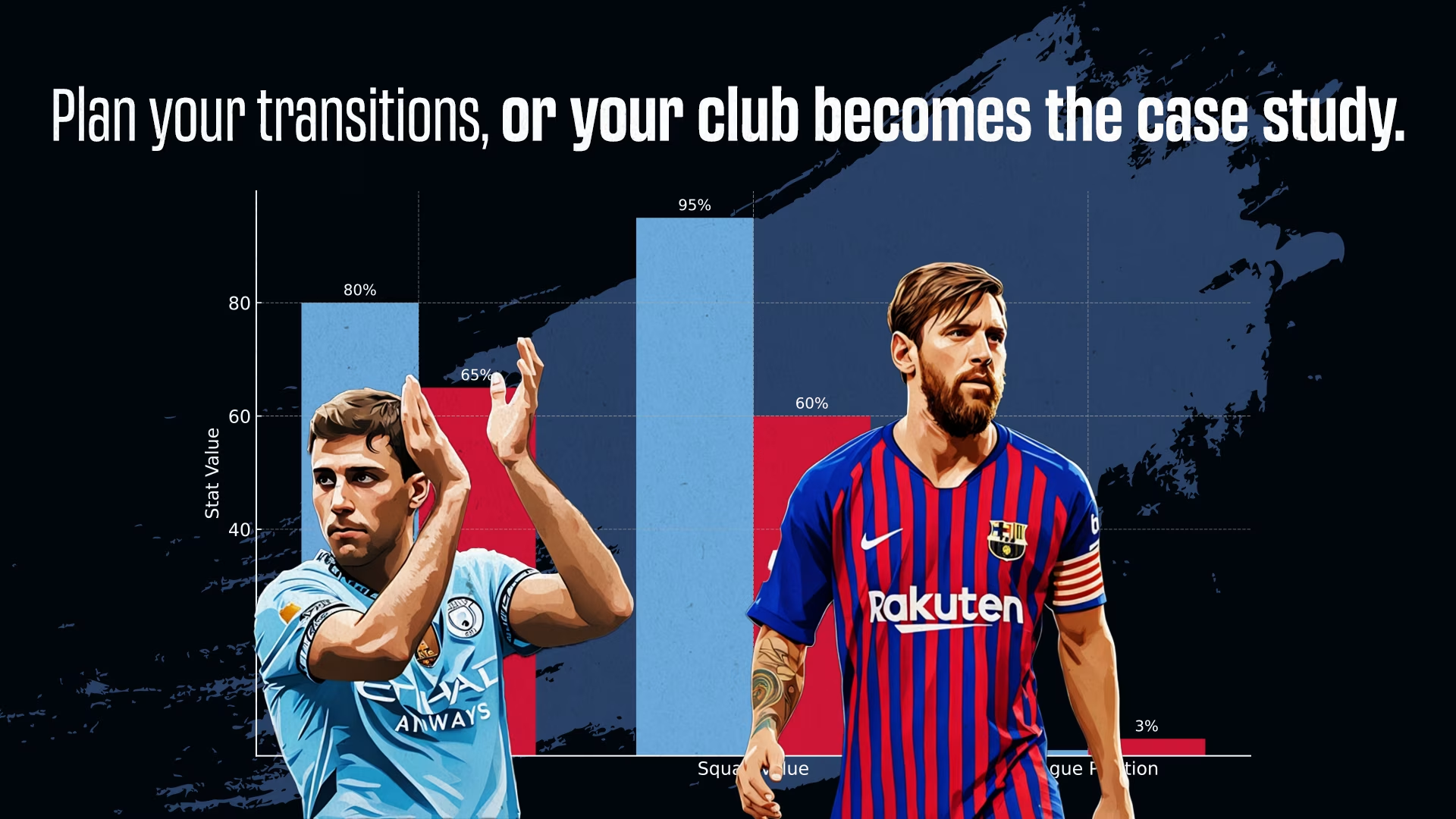
Some clubs struggle post-superstar, while others plan ahead.
Barcelona’s journey after Messi showed how tough transitions can be without a structured plan. A lack of clear succession left them vulnerable. Post-Messi, Barcelona’s win percentage dropped from 65% to 52% in La Liga.
Bayern Munich, on the other hand, is a masterclass in long-term squad planning. By identifying key players for the future and methodically phasing out veterans, they’ve maintained dominance while staying competitive. Over the last decade, Bayern’s squad refreshes have kept their average league position at 1.2 in the Bundesliga.
The difference? Planning, patience, and proactive decision-making.
Tools for Scouting and Succession Planning
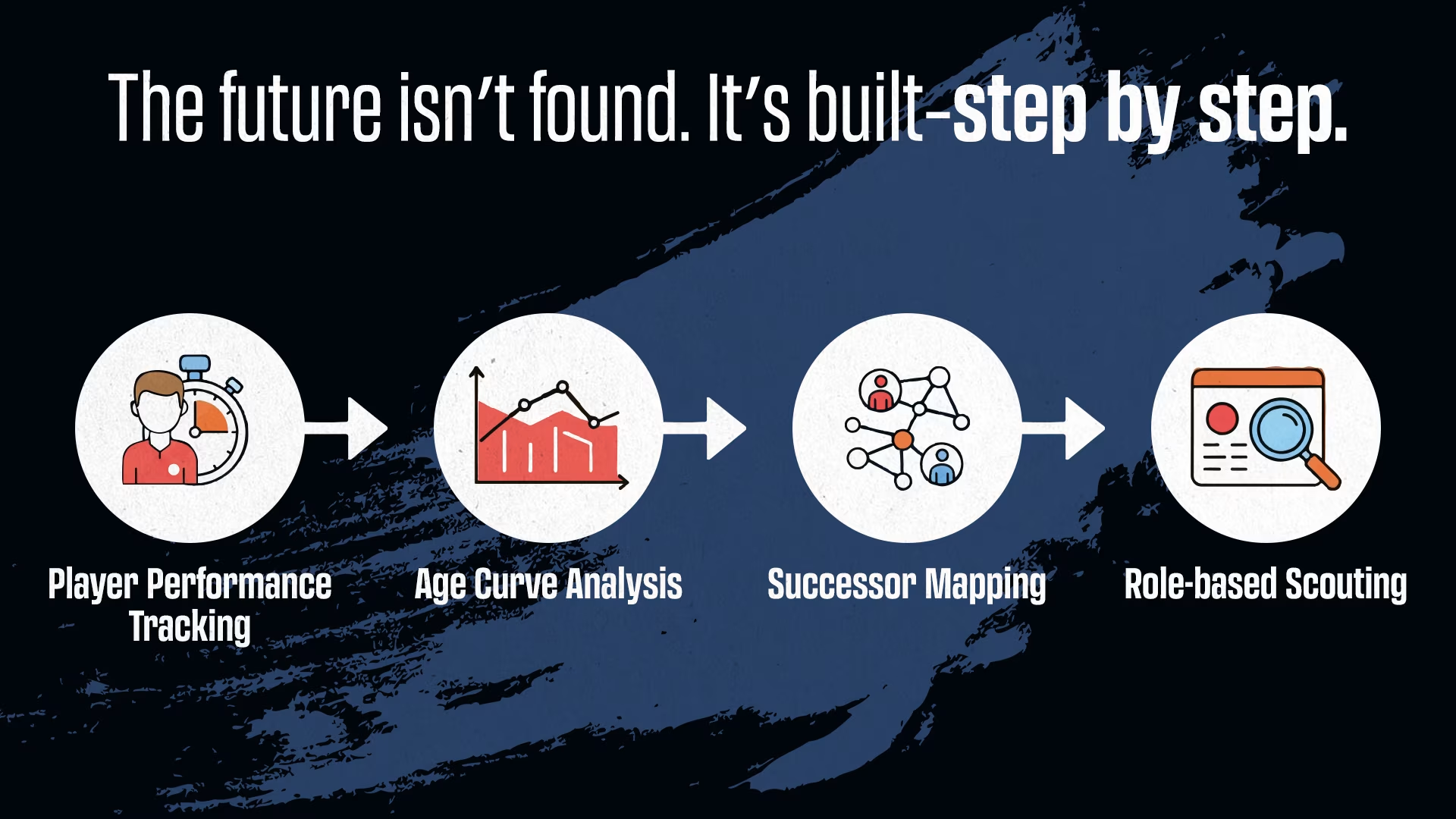
Transitions aren’t left to chance. Clubs use data-driven insights to build long-term succession plans.
Platforms like StepOut empower clubs to scout future stars, assess squad dynamics, and optimize transitions. By analyzing player metrics, age curves, and tactical fit, technical directors and managers can make informed decisions that ensure sustainability.
For instance, clubs using data-driven recruitment strategies have been shown to reduce transfer market risks by 40% and increase the probability of signing a successful player by 60% compared to traditional scouting alone.
The Future Is Built Today
In football, transitions aren’t just about replacing players—they’re about carrying forward a legacy. For managers, technical directors, and youth coaches, the goal is the same: to ensure the team’s future is as bright as its past.
With the right balance of experience, vision, and tools, the next generation can keep the dream alive.
⚽ Which club do you think has managed generational transitions best? Let’s discuss!
🚀 At StepOut, we help clubs make data-driven decisions for a sustainable football future.