
StepOut
Liverpool's Data-Driven Path to Premier League Glory in 2025
Top Five Leagues, Football Analytics

Liverpool's Data-Driven Path to Premier League Glory in 2025

Built on Data, Powered by Precision

1. Recruitment Revolution: The Science of Talent
1. Recruitment Revolution: The Science of Talent

Most clubs scout players with the eye test. Liverpool took it a step further — using data analytics to uncover impact players who would perfectly fit their evolving system.

Under Arne Slot, Liverpool doubled down on a data-first approach to recruitment. New signings were evaluated not on name or hype, but on how their metrics aligned with the club’s high-intensity, possession-focused system.

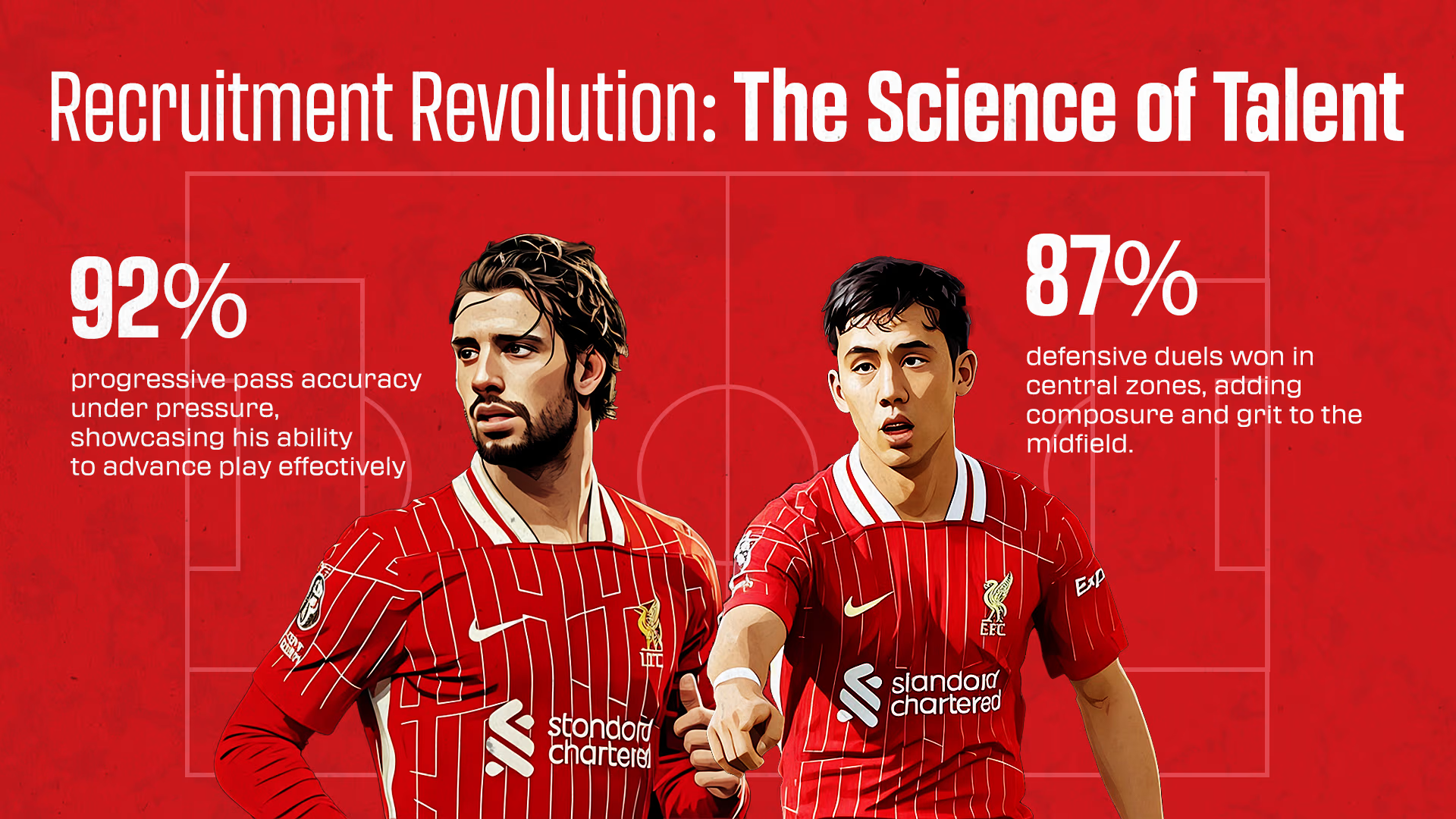
One of the standout additions was Dominik Szoboszlai, whose ability to progress the ball under pressure was a major asset in midfield. Key Stats: Szoboszlai: Achieved 92% progressive pass accuracy under pressure, Wataru Endō: Excelled in defensive duels and maintained high recoveries per 90.

This analytical approach ensured that every acquisition wasn’t just a good player — they were the right player.

2. Staying Healthy: Data as the Ultimate Fitness Coach
2. Staying Healthy: Data as the Ultimate Fitness Coach

Injuries had been Liverpool’s Achilles heel in previous seasons. But in 2024–2025, data became the best fitness coach they ever had.

With GPS tracking, HRV monitoring, and customized load management, players like Virgil van Dijk and Trent Alexander-Arnold remained at peak condition across a grueling schedule.

This proactive system, backed by live data streams, meant fewer breakdowns, quicker recoveries, and a more consistent starting XI.

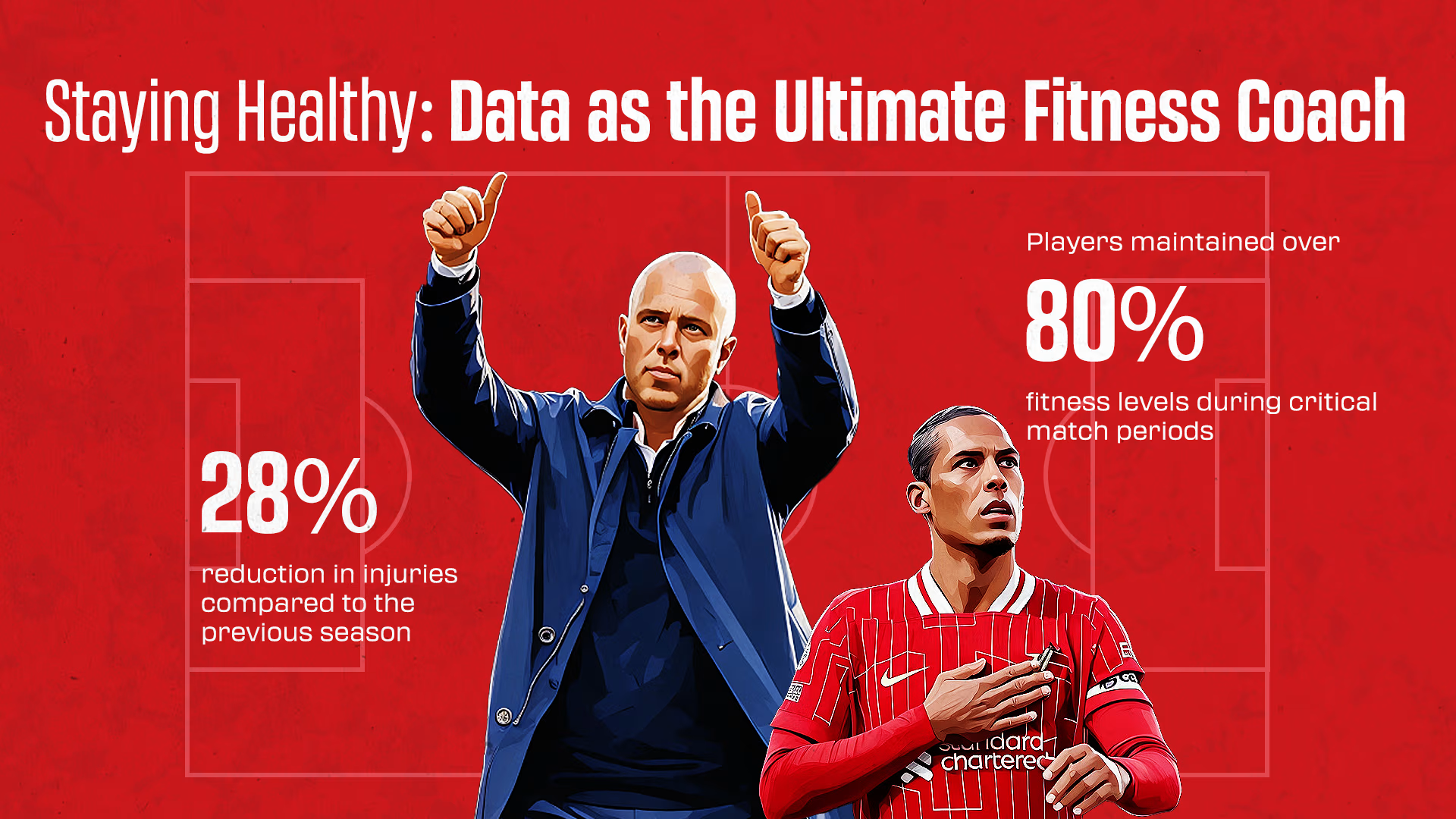
Key Stats: Injury reduction: 28% compared to previous season, Average squad fitness: 82% during high-pressure matches, Van Dijk: Played every minute of Liverpool’s biggest games.

3. AI-Enhanced Set-Pieces: Turning Data Into Goals
3. AI-Enhanced Set-Pieces: Turning Data Into Goals

Liverpool’s collaboration with DeepMind and the implementation of TacticAI brought a new edge to their set-piece strategy.

By analyzing over 2,000 corner kicks and identifying defensive patterns of opponents, Liverpool refined their routines to clinical precision. This approach paid off — especially in high-stakes matches.

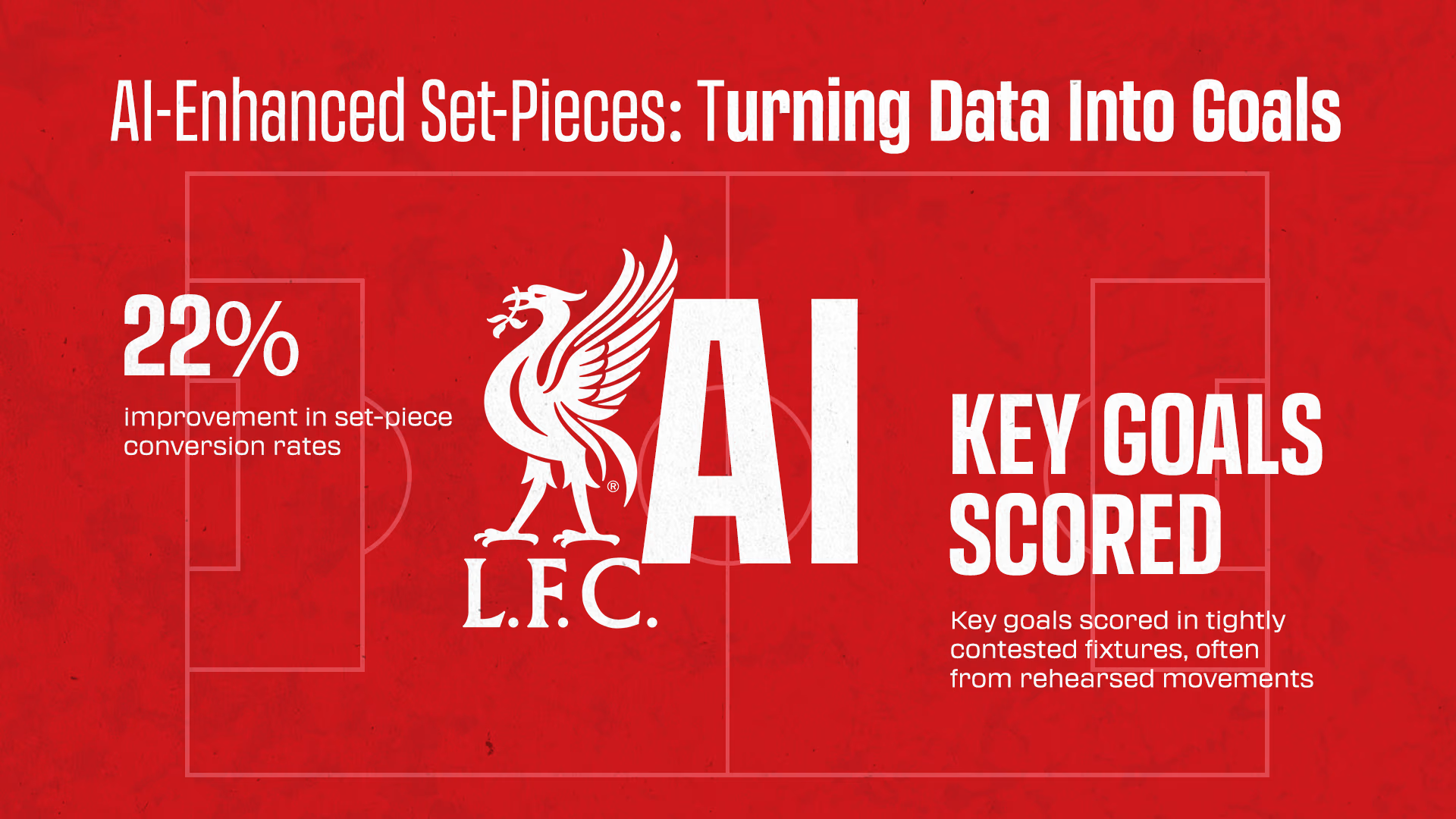
Key Stats: 22% increase in set-piece conversion rate, Van Dijk’s header against Manchester City — a goal born from pattern recognition and predictive models.

4. Tactical Genius: Data Behind Slot’s Adjustments
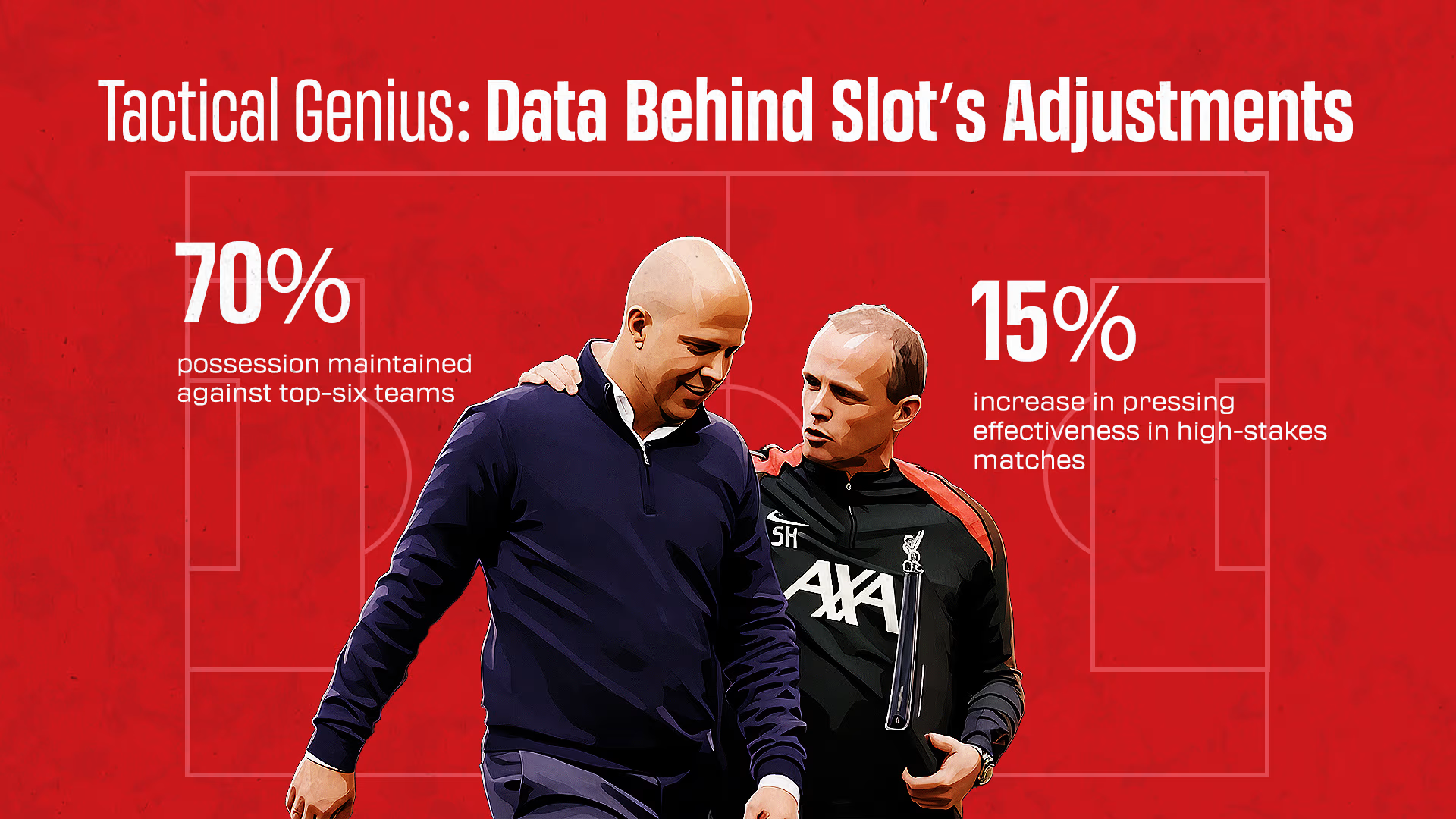
4. Tactical Genius: Data Behind Slot’s Adjustments

While Jürgen Klopp laid the groundwork for a data-savvy Liverpool, Arne Slot elevated it with real-time tactical decision-making. From fine-tuning pressing intensity to adjusting formations mid-game, Slot used live data to outsmart opponents.

Unlike Klopp’s high-press style, Liverpool averaged closer to 50% possession against fellow title contenders this season. The team shifted towards a more pragmatic, defensively disciplined approach—managing games smartly rather than chasing possession. This evolution made Liverpool tougher to break down and better at controlling key moments without dominating the ball.

Key Stats: Around 50% average possession vs top-six teams, Improved defensive solidity with Liverpool conceding fewer expected goals per 90 compared to previous seasons, Pressing intensity metrics show a more measured approach, reducing high press volume but increasing effectiveness when applied.

Conclusion
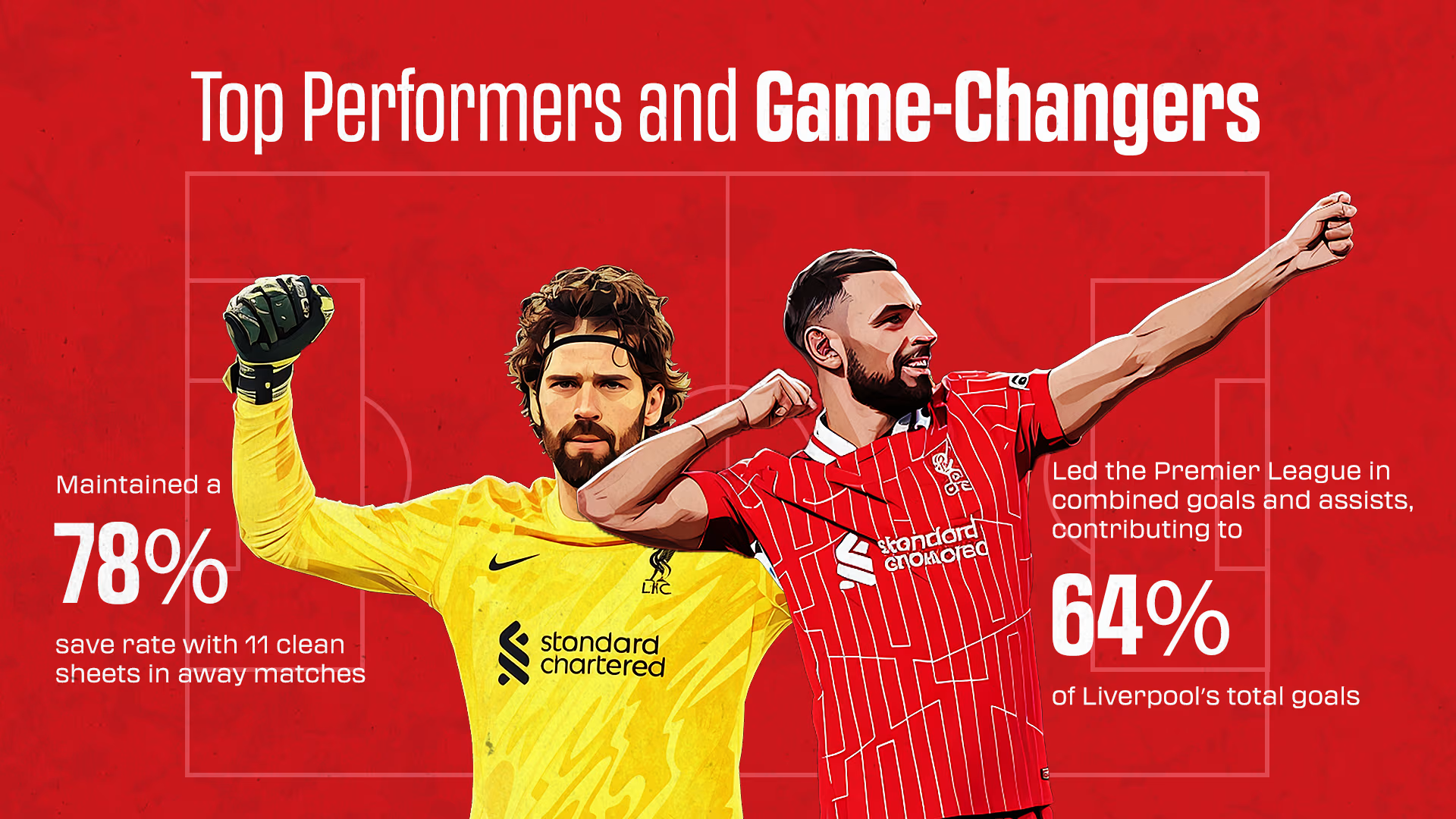
Conclusion

Liverpool’s 2025 Premier League title was more than a sporting achievement — it was a proof of concept for a data-centric football philosophy.

From the training pitch to the touchline, data influenced every call. This wasn’t just about playing smarter — it was about creating a system where every detail is optimized, measured, and improved upon.

Liverpool didn’t just win the Premier League; they redefined how football will be played in the future. In this new era, data isn’t a tool — it’s the game itself.
Blog

Sideline Stories - Check Out What's Happening

View All Articles
StepOut vs Spiideo: Comparing Football Analysis and Performance Platforms
Football Analytics Tool

StepOut vs Spiideo: Comparing Football Analysis and Performance Platforms

Spiideo and StepOut sit in this space from different starting points. Spiideo brings together automated camera systems, video analysis, live production and data through its wider sports video platform. StepOut works from match footage, using AI to structure what happens on the pitch into football intelligence that can support match analysis, player development, scouting and wider club workflows. For clubs and academies comparing the two, the useful question is less about which platform offers more features and more about how each one fits into the way the organisation captures, analyses and uses football data.

StepOut vs Stats Perform (Opta): Comparing Football Analytics Platforms
Football Analytics Tool

StepOut vs Stats Perform (Opta): Comparing Football Analytics Platforms

StepOut and Stats Perform, through its Opta ecosystem, operate across many of these requirements, but they come from different starting points. StepOut begins with match footage. Its AI-driven workflow turns uploaded video into structured player, team and match information, which can then be used across tactical analysis, player development, scouting and wider football workflows. Stats Perform builds around Opta, one of the industry's most established football data operations. Its current football offering combines event data, tracking, physical information, AI-enriched metrics, recruitment tools, software and APIs. Opta Vision adds continuous positional data for all 22 players, synchronised with event data, across more than 80 competitions.

StepOut vs Driblab: Comparing Football Analytics and Scouting Platforms
Football Analytics Tool

StepOut vs Driblab: Comparing Football Analytics and Scouting Platforms

Football analytics platforms approach that question from different starting points. Some begin with match footage, some with large statistical databases, while others combine event data, tracking and specialist analysis to build a broader picture of performance. Driblab has built its reputation around football data, advanced analytics and scouting. Its current ecosystem includes Driblab XY for player and team analysis, optical tracking, physical data, Arrigo for combined event and tracking intelligence, Capture for turning uploaded match video into advanced data, Driblab Hub for scouting workflows, and consultancy services. Its platform covers more than 200 competitions and hundreds of thousands of players, with data available through its software, exports and API. StepOut approaches the problem from a different starting point. Its workflow begins with match footage. Clubs upload video, StepOut processes it through computer vision and proprietary machine learning and LLM models, and the resulting player, team and match information is made available through its TMS and wider football ecosystem. The platform extends into tactical analysis, player development, scouting, benchmarking and the Athlete App. The overlap between the two is significant, particularly around performance analysis, scouting and data-driven decision-making. The differences become clearer when looking at how each platform generates, structures and applies football intelligence.

Curious How This Would Work?

Access in-depth performance data, tactical intelligence, and AI-driven match insights for your team.

WhatsApp