
A rebuild in motion
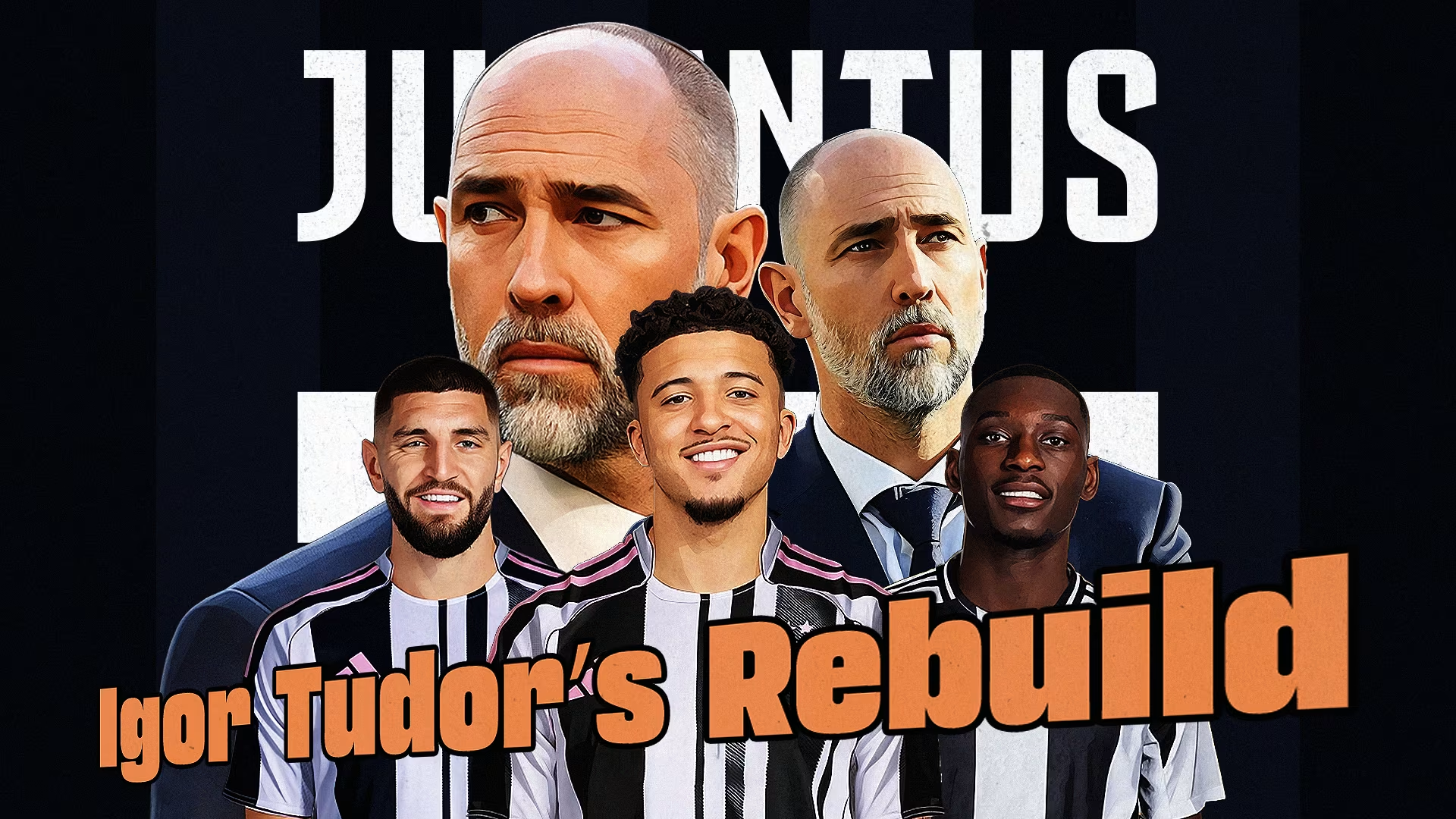
Juventus’ latest transfer window isn’t just about fixing a broken squad, but shows trust, giving Igor Tudor the players to match his aggressive, vertical style. After a disappointing end to last season and the fan backlash over uninspired performances, the Bianconeri have turned to functionality, familiarity, and fresh legs. With several high-profile exits already in motion and more expected, including the likes of Lloyd Kelly, Tiago Djalo, Filip Kostić and potentially Dusan Vlahovic, Juventus are beginning to reshape a squad with serious gaps in both defence and attack. The transfer plan is methodical: clear out underperformers, buy smart, and get players who fit Tudor’s philosophy. The coach, who has also managed teams in Ligue 1, has been lauded by opponents for his squad's physicality and commitment to the badge.
Jeff Chabot: The defensive fix
The Lloyd Kelly experiment is already over. Signed for €17.2 million from Newcastle, Kelly was supposed to be a left-sided centre-back solution but has ended up being one of the most criticised signings in recent Juventus history. No takers have emerged yet, and the club is now looking to offload him — ideally before the window closes. In his place, Tudor is pushing for Jeff Chabot. Currently at VfB Stuttgart, the German defender is valued at €9 million and brings both experience and Serie A familiarity. He previously played with Sampdoria and Spezia and famously nullified Dusan Vlahović during a Champions League clash last October, which became an audition that left a mark. With Saudi side NEOM SC also circling, Juventus will need to act fast. But for a backline that has looked increasingly brittle, Chabot represents a physical, low-cost fix who fits the kind of one-on-one defending Tudor expects. Chabot was one of the Bundesliga’s most reliable ball-playing centre-backs last season, ranking in the 91st percentile for pass completion and 90th for progressive passes. He also dominated in the air, winning 91.7 percent of his aerial duels, which is one of the best among centre-backs with over 2,000 minutes.
Randal Kolo Muani: Why Juve really want a focal point
In January, Juventus made a low-risk move that could now become a high-reward investment, which was bringing in Randal Kolo Muani on loan from Paris Saint-Germain. The French forward started like a firecracker, scoring five goals in his first three Serie A games, before cooling off mid-season. However, his late-season form - eight league goals and one assist, plus two more goals and an assist at the Club World Cup helped convince Tudor that he’s worth keeping. Juventus and PSG have now reached a breakthrough: the player will stay, with the Bianconeri agreeing to a loan that includes an obligation to buy. That structure satisfies PSG’s need for guaranteed revenue while giving Juve breathing room to handle FFP constraints. The only hurdle remaining is the final transfer fee and squad space, as the club may need to move on from Vlahović to balance the books. Kolo Muani’s numbers suggest he’s ready for a lead role. He ranks in the 86th percentile for non-penalty goals and 97th for goal conversion, while also ranking high for touches in the box (80th percentile) and off-ball duels won (67.1%). If Juve can unlock his consistency, Kolo Muani could be the athletic, two-way striker the system needs.
Jadon Sancho: The winger question
While not a done deal, Juventus are seriously considering Jadon Sancho as part of their wide attacking plans. The English winger just returned to Manchester United after a loan spell at Chelsea, where he won the UEFA Europa League and rediscovered glimpses of his Dortmund form. His name has been floated in Turin as a potential option, especially if either Francisco Conceição or Nico González depart. Sancho’s current market situation is complex. United are open to letting him go, and while Borussia Dortmund and Bayer Leverkusen have shown interest, Juventus remain in the frame. His numbers from last season are uneven: 90th percentile for progressive carries and 75th for successful dribbles, but only 36th for non-penalty goals and 33rd for assists. Still, in Tudor’s system, where wide players are expected to beat men and carry into the final third, Sancho could have value if acquired under the right terms. No move is imminent, but the door is open depending on Juve’s outgoings. Besides the Italian side, Nottingham Forest are also eyeing him as a replacement for Anthony Elanga. However, Juve might just be the Englishman's last good shot at playing for a 'big' team.
A new identity, slowly forming
Tudor’s Juventus is beginning to take shape as a tough, vertical unit based on clarity over reputation. Chabot isn’t a flashy name, but he offers the rugged dependability the backline needs. Kolo Muani brings clinicality and cutting edge up front. And Sancho, should he arrive, could be the kind of inverted winger who thrives under Tudor’s intense, space-hunting blueprint. With a new batch of stars coming in, the ‘young’ core of Tudor’s team only gets bolstered. While they're not entirely ‘new’, breakout seasons for Kenan Yıldız and Francisco Conceição offer a solid foundation for years to come. Yildiz, who signed from Bayern in 2022, is their youngest-ever goalscorer in the UEFA Champions League. At just 20, the left winger is a solid prospect for the future. His 7 Serie A goals and 4 assists last season is only a precursor of what's to come. As for 22-year-old Francisco Conceição, his speed, dribbling ability and vision immediately making him a valuable asset for Porto, for whom he made the first team debut when he was just 18. The Portuguese forward has made the right flank his own, with projections of his talent and ability only pointing upwards. Last season, he was directly involved in 9 goals in all competitions for the Italians. With the Club World Cup now in the rear-view and pre-season preparations underway, Juventus have shifted their attention to build something sustainable rather than just reacting to problems. It’s early, and much depends on whether they can clear space and seal the right deals. But one thing is clear: in the 2025/26 season, rebuilding the team comes first. A stark shift from signing big names, proven stars and defensive stalwarts to relying on young, raw talent might just be what sets this Juve side apart from the rest. Now, function comes first.