



Transforming today's prodigies into tomorrow's icons!




Spatial Control and Positional Reference
At the heart of zonal pressing lies spatial dominance. Players defend predetermined pitch zones while maintaining vertical and horizontal compactness. Central corridors, half-spaces, wide channels, and the space between the lines act as tactical reference points. This philosophy is heavily influenced by positional play principles associated with Johan Cruyff, where optimal spacing in possession reduces defensive exposure. By preserving structured inter-player distances and line staggering, teams remain prepared to counter-press immediately after losing the ball. Defensive organization begins before possession is lost. Through modern tracking data, coaches can now measure inter-line spacing, compactness radius, and spatial occupation to ensure zonal structures remain intact throughout the match.

Pressing Triggers and Zonal Traps
Zonal pressing is activated through clearly defined pressing triggers. Backward passes, lateral circulation in the first build-up line, closed-body receptions, isolated full-backs, and poor touches signal collective pressure. Rather than chasing opponents, teams guide play into predetermined zones—often near the touchline—where pressing angles, cover shadows, and numerical superiority create traps. The objective is not only ball recovery but forcing predictable behaviour, limiting progressive passes, and accelerating opponent decision errors. Data analytics enhances this process by identifying the most frequent pressing triggers and evaluating pressing efficiency in specific pitch zones.
Integration with Rest Defence
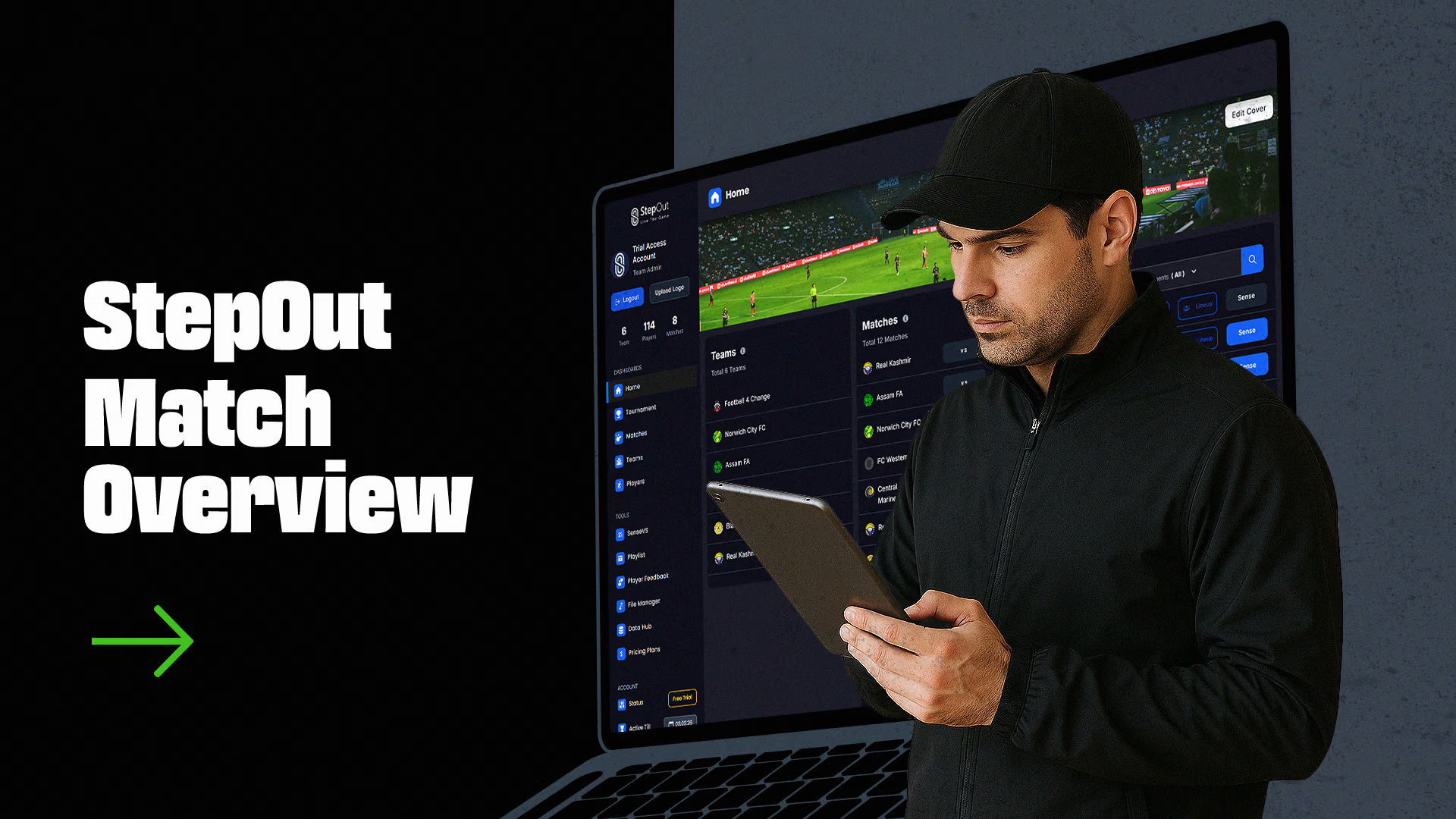
Modern zonal pressing cannot function without rest defence. Coaches influenced by Pep Guardiola structure possession phases in shapes such as 2-3 or 3-2 behind the ball to secure central areas and half-spaces. Rest defence ensures numerical balance during transitions, providing immediate access to counter-pressing while preventing exposure in wide channels. In this context, zonal pressing becomes preventive defence—minimizing transition risks before defensive phases even begin. Platforms like StepOut allow analysts to evaluate rest-defence positioning, transition control, and structural compactness using AI-driven tracking insights, helping teams refine spatial security.
Zonal Pressing Across Block Heights
Zonal pressing adapts depending on defensive block height. In high blocks, teams use ball-oriented shifting to trap build-up sequences near the sideline. In mid-block structures, the focus shifts to screening central passing lanes and protecting the space between lines. In low blocks, zonal compactness prioritizes shot suppression zones, cut-back coverage, and box protection. Across all heights, synchronization between defensive, midfield, and attacking lines is essential. Effective zonal pressing requires controlled inter-line distances and coordinated lateral movement. Modern performance metrics now assess line synchronization timing and pressing distances to prevent structural fragmentation.
Advantages and Tactical Vulnerabilities
Zonal pressing enhances collective compactness and reduces chaotic defensive behaviour. It improves territorial control, supports transition defence, and lowers individual defensive workload by relying on coordinated movement rather than isolated duels. However, vulnerabilities exist. Dynamic positional rotations, third-man combinations, and half-space overloads can destabilize zonal structures. Poor communication or reduced intensity may create gaps between lines, exposing defensive corridors. Advanced performance analysis plays a key role in identifying these weaknesses. By analyzing overload patterns, spacing breakdowns, and pressing success rates, coaches can reinforce structural discipline and adjust tactical behaviour.
Conclusion
Zonal pressing represents a paradigm shift from reactive marking to proactive spatial control. Rooted in positional play philosophy and integrated with rest defence, it merges attacking structure with defensive preparedness. As football continues to evolve toward positional fluidity and data-driven optimization, zonal pressing remains central to modern tactical organization. It defines how teams manage space, dictate opponent behaviour, and maintain structural dominance across all phases of the game.
Access in-depth performance data, tactical intelligence, and AI-driven match insights for your team.
