
FIFA World Cup 2026 Group Stage Draw
Full Results & Tactical Analysis
Introduction
When FIFA expanded the World Cup to 48 teams, the conversation around the draw shifted. In a 32-team tournament, the group stage was binary: qualify or don't. In this new structure, 32 of 48 teams progress to the knockout rounds — meaning two thirds of the field advances. That sounds generous. Look closer, though, and the arithmetic is more demanding than it appears.
The top two teams from each group qualify automatically. Eight third-placed finishers — the best across all 12 groups — also progress. Which means four third-placed teams go home. Being third in your group is not automatically safe. Being third in a weak group may be safer than second in a ruthless one. Squad rotation becomes tactically imperative. Bench depth is no longer a luxury — it is structural necessity.
The draw was always going to produce uneven groupings. The seeding system, built around FIFA World Rankings and confederation representation rules, created some logical separations. But inevitably, certain groups carry far heavier loads than others. The question worth asking is not just "who qualifies?" but "what does survival cost each team?" A squad depleted or pressed hard in the group stage enters the knockout rounds at a disadvantage. The best draws are not necessarily the easiest — they are the ones that allow a team to manage load, test systems, and arrive at the Round of 32 with full intensity intact.
Here is what the draw produced.
The Full Draw: All 12 Groups at a Glance
Before the tactical breakdown, the groups in full:
Group A: Mexico, South Africa, South Korea, Czechia
Group B: Canada, Bosnia-Herzegovina, Qatar, Switzerland
Group C: Brazil, Morocco, Haiti, Scotland
Group D: United States, Paraguay, Australia, Türkiye
Group E: Germany, Curaçao, Ivory Coast, Ecuador
Group F: Netherlands, Japan, Sweden, Tunisia
Group G: Belgium, Egypt, Iran, New Zealand
Group H: Spain, Cape Verde, Saudi Arabia, Uruguay
Group I: France, Senegal, Iraq, Norway
Group J: Argentina, Algeria, Austria, Jordan
Group K: Portugal, DR Congo, Uzbekistan, Colombia
Group L: England, Croatia, Ghana, Panama
Group A: Mexico and the Host Advantage Equation
Mexico | South Africa | South Korea | Czechia
Mexico enter as co-hosts, inheriting automatic seeding and a relatively navigable path. Their opening fixture — a rematch of the 2010 World Cup opener against South Africa — carries symbolic weight but is genuinely winnable. El Tri's central concern is not qualification but form: they need competitive matches that build momentum, not comfortable wins that mask tactical gaps.
South Korea bring K-League athleticism and a reliable pressing structure, though their European-based stars' availability across a compressed schedule will be scrutinised. Czechia, arriving via the UEFA playoffs, are organised and hard to break down but lack the squad quality to seriously threaten the top two. South Africa remain FIFA's lowest-ranked side in the draw — their floor is significantly lower than any other Pot 3 side.
Verdict: Mexico and South Korea advance. South Africa's tournament ends early.
Group B: Canada's Moment — and Its First Real Test
Canada | Bosnia-Herzegovina | Qatar | Switzerland
Canada's path into this tournament has been defined by a generation of Premier League and Bundesliga talent coming of age simultaneously. Home advantage is real — Vancouver hosts their group fixtures. But Bosnia-Herzegovina bring genuine quality through Edin Džeko's legacy system and a new generation of creative midfielders. Switzerland, disciplined and tactically consistent under their confederation structure, will make this competitive.
Qatar are the structural outlier — they qualified as the host of the previous tournament, returning to a World Cup stage with a squad whose domestic base limits their ceiling. Their defensive organisation will be tested repeatedly.
Verdict: Canada and Switzerland qualify, with Bosnia-Herzegovina making it uncomfortable.
Group C: Brazil's Statement Group
Brazil | Morocco | Haiti | Scotland
This is Brazil's group to control — and control it they should. But Morocco's arrival changes the calculus. The Atlas Lions are no longer a romantic story; they are a tactically coherent unit with a high defensive line, disciplined midfield press, and dangerous transition play. Their 2022 semifinal run was not an anomaly — it reflected genuine structural quality that has continued to develop.
Haiti enter the tournament's history books as one of the most notable qualifiers at this level. Scotland, arriving via the UEFA playoffs, carry the intensity of their British-press style but will find Brazil's quality in advanced areas exceeds anything they've encountered in qualification.
Performance data tracking through platforms like StepOut.ai shows Morocco consistently among the top CAF sides in pressing intensity and counter-attack conversion — metrics that translate well to knockout football even when they do not dominate possession.
Verdict: Brazil and Morocco qualify. Group C could produce the tournament's biggest individual performance from a Brazilian attacker.
Group D: The USMNT's Home Opportunity
United States | Paraguay | Australia | Türkiye
The draw was kind to the United States. Playing at home, in familiar conditions, against opponents they are ranked above in every metric that matters, the USMNT enter this group as clear favourites. Christian Pulisic, Gio Reyna, and a generation of European-based talent arrive at peak age. The expectation is not just qualification — it is winning the group convincingly.
Türkiye are the most dangerous of the three opponents. Their mid-block defensive structure and physical presence in set-piece situations make them difficult over 90 minutes. Paraguay are energetic but lack the technical ceiling to exploit American defensive vulnerabilities at this level. Australia's press-and-transition model creates problems for teams that like to build slowly, but the USMNT's verticality tends to neutralise that.
Verdict: United States top the group. Türkiye take second on goal difference over Paraguay.
Group E: Germany and the Curaçao Footnote No One Will Forget
Germany | Curaçao | Ivory Coast | Ecuador
This group's most memorable fixture was written the moment the draw concluded: Germany vs. Curaçao, the smallest nation in World Cup history facing one of its giants. The scoreline will be irrelevant to the broader narrative of football's expansion — but the matchup itself is a compelling symbol of what the 48-team format enables.
Germany's real test is Ivory Coast. The Elephants, led by a midfield generation of technical quality, are capable of pressing the Germans into uncomfortable half-spaces. Ecuador add physical intensity and a direct style that punishes passive defending. This group features genuine competitive balance between positions two, three, and four.
Verdict: Germany advance comfortably. Ivory Coast and Ecuador contest the second qualifying spot with real intensity.
Group F: The Deceptively Loaded Group
Netherlands | Japan | Sweden | Tunisia
On paper, this looks manageable for the Netherlands. In practice, it is anything but. Japan have eliminated Germany and Spain at consecutive World Cups — their press-and-transition system, built around relentless collective intensity rather than individual brilliance, is structurally designed to destabilise teams that rely on technical comfort zones.
Sweden bring Scandinavian physicality and tactical discipline. Tunisia's qualification journey produced a squad with genuine defensive organisation and the ability to frustrate higher-ranked opponents over 90 minutes. The Netherlands, despite their quality, enter with questions around their central defensive cover and the consistency of their pressing shape.
Verdict: Netherlands and Japan qualify, but this group will produce at least one result that resets tournament narratives.
Group G: Belgium's Final Window
Belgium | Egypt, Iran | New Zealand
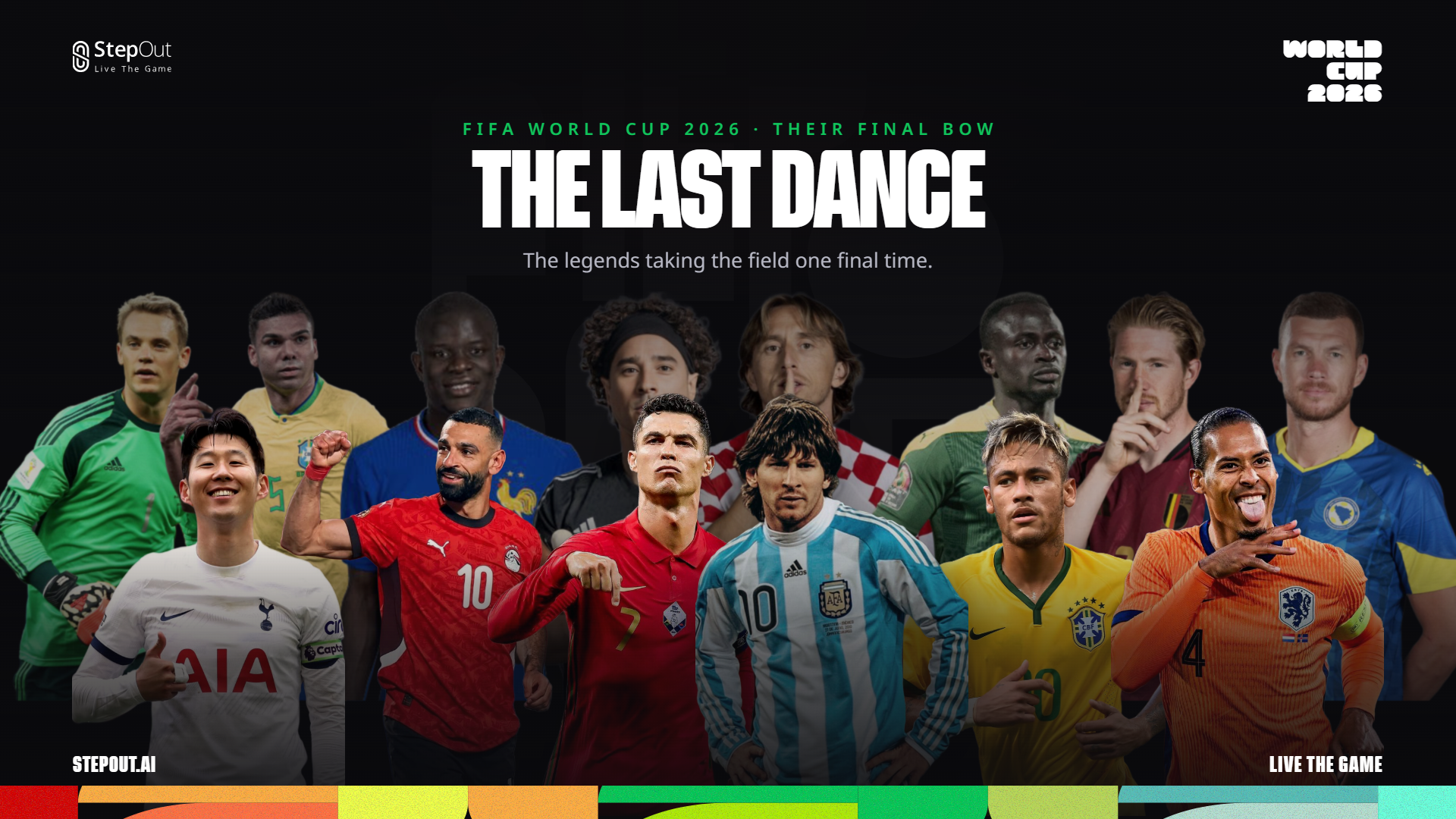
The Golden Generation conversation has moved from potential to precedent — this is Belgium's last collective opportunity with this core. Kevin De Bruyne, now at Napoli, remains the creative fulcrum. The question is whether the squad around him has rebuilt enough to support a deep run.
Egypt bring Mohamed Salah to his potentially final World Cup — a player of that quality demands respect in any group context. Iran are tactically organised and difficult to break down. New Zealand are making history by reaching this stage and will bring the intensity of a side with nothing to lose.
Verdict: Belgium and Egypt qualify, with De Bruyne's individual quality likely the decisive variable.
.png "Les moments de la Coupe du monde qui ont marqué des générations")