

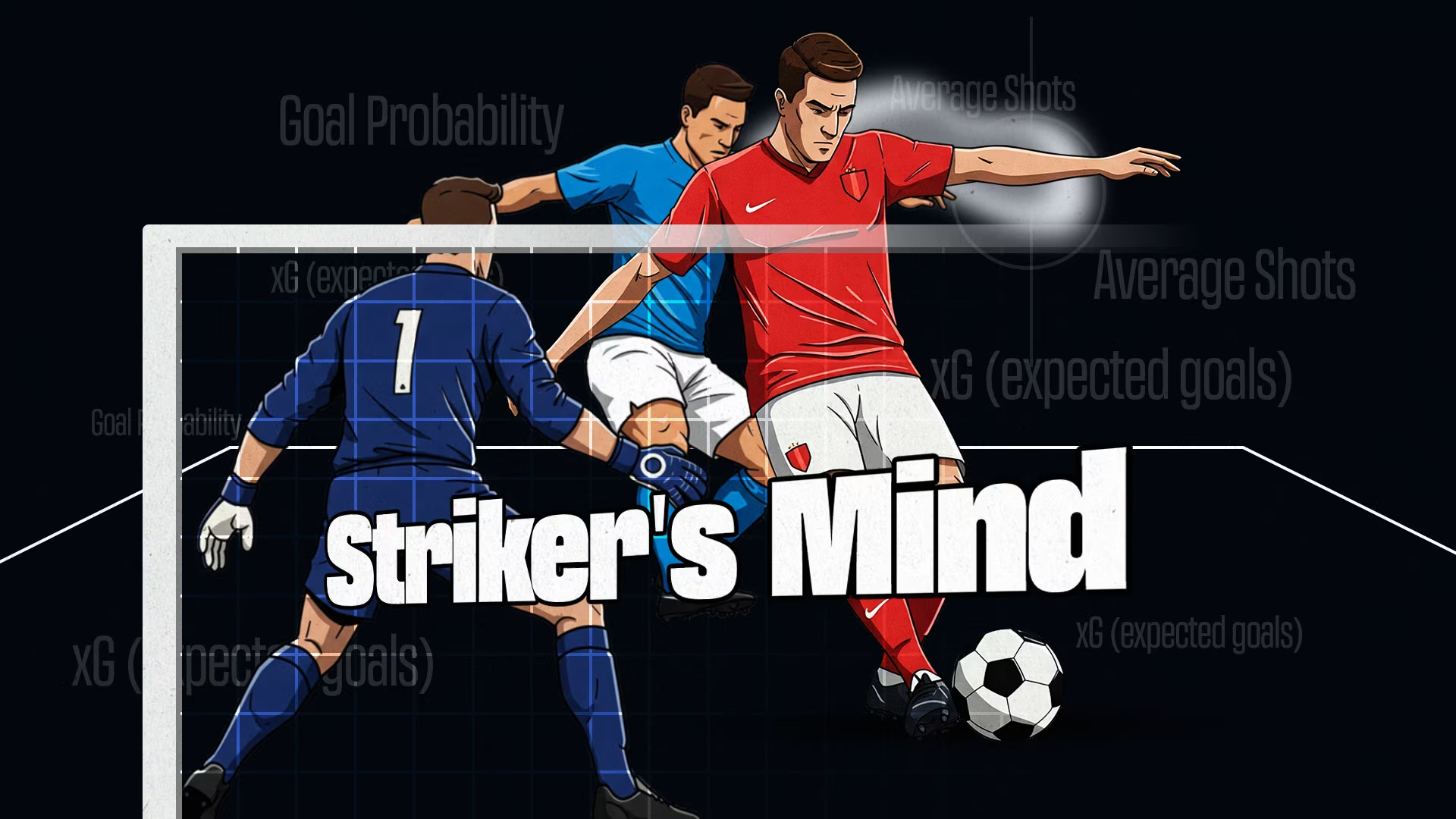
Inside the Mind of a Striker: The Science Behind Ice-Cold Finishing
Beyond Instinct – The Data-Driven Art of Finishing
90th minute. 1-1. The ball drops to the striker at the edge of the box. 60,000 fans hold their breath.
One touch. One second. One chance.
Shoot too early? The angle’s bad. Wait too long? The defender blocks it. Too much power? The shot sails over. Too little? The keeper smothers it.
From the stands, it looks like instinct. But inside the mind of an elite striker, it’s an instant calculation of probabilities.
What Separates World-Class Finishers from the Rest?
Great strikers don’t just react; they anticipate. They read the game, assess defenders' positioning, and visualize the keeper's likely movement—all in the blink of an eye. Every goal is a product of precision, patience, and a deep understanding of probabilities.
Shot Placement Is Everything
Ask any top striker, and they’ll tell you—placement beats power. A well-placed shot into the bottom corner has a 25% higher chance of beating the goalkeeper than one fired centrally.
Erling Haaland doesn’t just smash the ball—he directs it where keepers hate. His ability to shift his body angle at the last second increases his scoring efficiency.
A 5-degree shift in shooting angle can raise a shot’s expected goal (xG) probability by 8-10%. Even tiny adjustments matter.
Kevin De Bruyne, despite being a midfielder, maintains a shot accuracy of 45%, proving that vision and precision trump sheer force.
The best finishers don’t just shoot—they place their shots with surgical precision.
Not Just More Shots—The Right Shots
One of the biggest myths in football is that fewer shots mean better finishing. In reality, elite strikers are relentless shooters—but only in the right moments.
Erling Haaland – 3.99 shots per game
Harry Kane – 4.47 shots per game
Alexander Isak – 3.6 shots per game
The best don’t hesitate. They pull the trigger—but only when the numbers are on their side.
Shot Selection – Mastering Every Type of Finish
An elite striker doesn’t rely on one type of finish. They adapt to the situation and execute with precision.
Keeper rushing out? A first-time, delicate chip.
Defender blocking the angle? Curl it into the far corner.
Cross incoming? Direct the header against the keeper’s movement.
Elite forwards like Mbappé, Lewandowski, and Salah have mastered situational finishing, adjusting their technique in milliseconds. Their ability to read the game before receiving the ball separates the good from the great.
Under Pressure, Time Slows Down
Pressure makes or breaks a striker. The best seem to slow time itself, making the right decision when it matters most.
Strikers who are unmarked increase their finishing efficiency by 35%—not because they shoot better, but because they position themselves smarter.
Karim Benzema is a master at scanning defenders’ movements, using an extra half-second to set up the perfect strike.
Cristiano Ronaldo’s jump height (78 cm) allows him to outscore taller defenders in aerial duels.
Great strikers don’t just react. They anticipate.
The xG Battle: Reading the Game Like a Computer
Expected Goals (xG) isn’t just a stat—it’s a survival tool. Strikers who consistently overperform xG aren’t lucky, they’re smarter.
Messi’s Secret? Most players shoot when a defender is within 2 meters. Messi waits until 2.5+ meters, increasing his goal probability by 18% per shot.
Robert Lewandowski averages an xG overperformance of +0.25 per 90 minutes, meaning he scores more than the average player from the same chances.
Son Heung-min has the highest xG efficiency in Europe, scoring from lower-quality chances with an elite conversion rate.
Football is a game of moments. The best strikers maximize those moments.
A Goal Is Never Just a Goal
It’s precision. It’s patience. It’s probability.
Strikers aren’t just players. They’re human algorithms processing the game faster than the eye can see. Their finishing ability is a mix of science, instinct, and an obsession with improvement.
Next time you see a last-minute winner, ask yourself—was it instinct, or was it science?
🚀 At StepOut, we decode football’s numbers to unleash creativity on the pitch.
💬 Which striker do you think has the best shot selection in world football?
.png "The World Cup Moments That Defined Generations")