

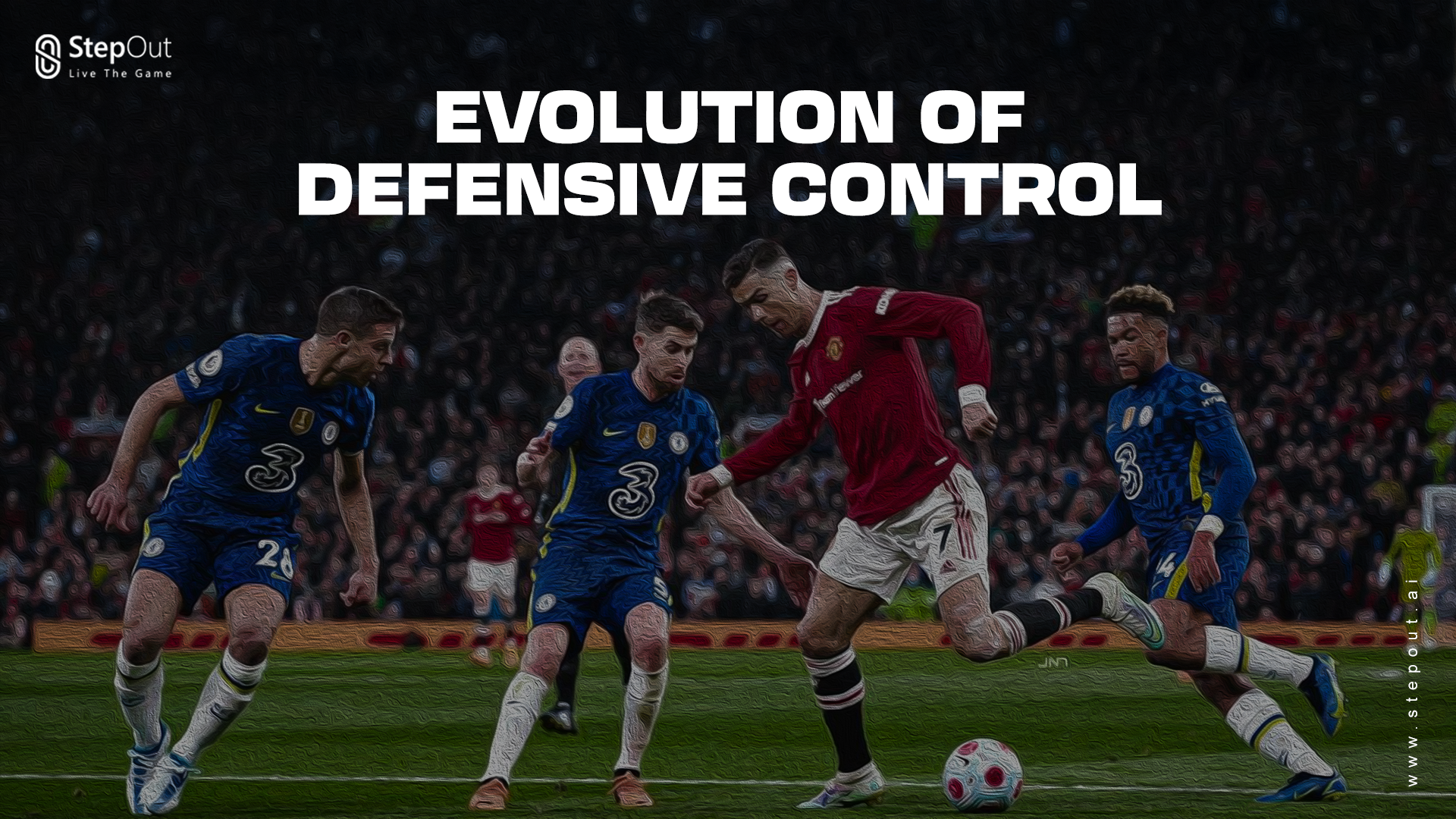
Evolution of Defensive Strategies in Football
How modern football defence shifted from reaction to control
From Duels to Space: The First Defensive Shift
In the early 2000s, defensive football revolved around man-oriented marking, physical duels, and rigid line structures. Teams defended primarily through individual responsibilities, tight marking, and low-to-mid block organisation, with success measured by tackles and clearances rather than spatial control. Over time, coaches began shifting toward zonal defending, prioritising horizontal and vertical compactness, line integrity, and space occupation. This transition marked the first major step toward defence as a collective, space-oriented phase rather than a series of isolated actions.
Zonal Dominance and Compactness as Control
Pep Guardiola’s Barcelona between 2008 and 2011 represented a defining moment in modern defensive thinking. Defending high with extreme vertical compactness, Barcelona compressed the pitch to limit opponent options rather than chasing individual players. The back line stepped aggressively, midfielders closed space between lines, and defenders used cover shadows and positional references to manage zones. Defensive success came not from winning duels, but from denying space altogether, allowing Barcelona to regain possession quickly and maintain territorial dominance.
Flexible Back Lines and Phase-Based Structures
Modern defensive systems no longer rely on fixed back-line shapes. Structures such as back fours, threes, and fives have become adaptable tools that change depending on game phase. Antonio Conte’s Chelsea during the 2016–17 season illustrated this evolution through a flexible back three that shifted into a compact back five without the ball. Wingbacks dropped deep, wide centre-backs protected half-spaces, and central defenders maintained box control. This structure neutralised wide overloads and reinforced central stability, demonstrating how defensive shape is now dictated by context rather than formation.
Pressing as an Organised Defensive Weapon
One of the most significant developments in modern defensive strategy is the formalisation of pressing. Pressing is no longer chaotic aggression but a coached behaviour based on triggers, traps, and spatial cues. Jürgen Klopp’s Liverpool between 2018 and 2020 exemplified this approach through gegenpressing, where immediate pressure following possession loss prevented counter-attacks and created attacking opportunities. Defensive compactness around the ball, rather than deep retreat, allowed Liverpool to dominate transitions and turn defensive actions into goals.
Rest Defence and Transition Management
As pressing intensified, controlling transitions became essential, leading to the widespread adoption of rest defence. Manchester City under Guardiola from 2021 to 2023 perfected this concept by structuring their attacking shape to defend potential counter-attacks. By maintaining numerical superiority behind the ball through a stable 2-3 or 3-2 base, City were able to press aggressively while protecting central space. This integration of defence into attacking structure proved that possession dominance and defensive security could coexist at the highest level.
Defensive Roles Beyond Pure Stopping
Modern defenders are no longer evaluated solely on their ability to defend the box. Role specialisation has expanded to include space defenders, progressive centre-backs, defensive midfield screeners, and sweeper-keepers. Atlético Madrid under Diego Simeone showcased how role clarity enhances defensive cohesion, with wide midfielders doubling as defensive forwards and central players prioritising space protection. More recently, Mikel Arteta’s Arsenal demonstrated how defenders can act as tactical multipliers, stepping into midfield, initiating presses, and supporting rest defence while maintaining structural balance.
Defence as a Game-Model Principle
Defensive systems are now embedded within a team’s overall game model rather than treated as a separate phase. Teams defend in one structure and attack in another, adjusting dynamically based on opposition behaviour and match context. This shift reflects the modern understanding that defensive efficiency is created through positioning, spacing, and coordination rather than reactive recovery. Defending has become situational, intelligent, and deeply connected to how teams build and attack.
What This Evolution Means — and the StepOut Perspective
The future of football defence lies in collective organisation, positional fluidity, and data-informed decision-making. Teams like PSG under Luis Enrique and Bayern Munich under Vincent Kompany show that aggressive pressing, high defensive lines, and structured rest defence can deliver both control and dominance. As defensive performance becomes increasingly about space, transitions, and structure, traditional metrics are no longer sufficient. This is where platforms like StepOut play a critical role, translating complex defensive behaviour into clear tactical insights that help coaches, analysts, and players understand not just where actions occur, but why they work within the system.
Frequently Asked Questions
How has modern defensive strategy evolved in football?
Modern defensive strategy has shifted from man-oriented marking to system-oriented spatial control, with teams using data and analytics to prioritise pressing intensity and compactness.
What role does pressing play in modern defensive systems?
Pressing is now a coached behaviour using triggers and spatial coordination, and football analytics measure pressing efficiency to show how quickly teams regain possession and prevent attacks.
What is rest defence and why does it matter?
Rest defence stabilises the team shape after loss of possession, ensuring counter-attacks are less effective; modern analytics view rest defence as vital for transition control.
How do player roles influence defensive strategy today?
Defenders are now tactical multipliers, with specific roles like space guardian or defensive playmaker, and AI football analytics help quantify their contributions beyond traditional tackles.
Why is defence considered part of the game model rather than a separate phase?
Defence is now integrated into a team’s overall strategy, with spatial organisation and transition control analysed through advanced metrics to reflect system-wide performance.
.png "The World Cup Moments That Defined Generations")