

The Tactical Value of Transitions
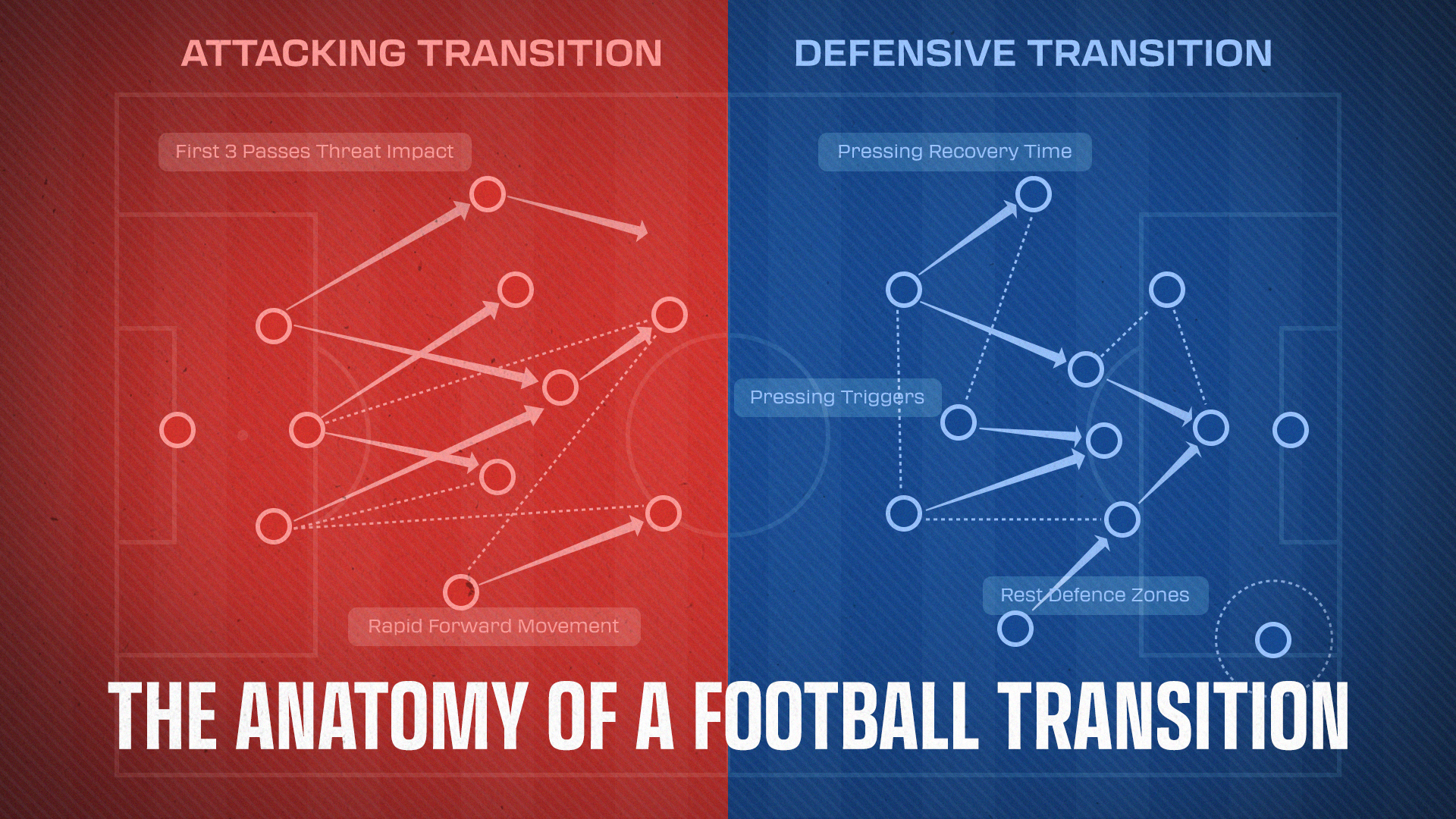
Football transitions are no longer random reactions; they are deliberate tactical phases that influence ball progression, defensive reshaping, and scoring opportunities. Transition training bridges attacking intent with defensive structure, teaching players how to act instantly when possession changes, and analytics now quantify transition success as a core performance metric rather than a by-product of play.
Accelerating Attacking Transition Structures
Attacking transition drills emphasize rapid forward movement, exploiting disorganized opponent shapes immediately after turnovers. Small-sided overload games such as 4v3 or 5v4 simulate match moments where the first few passes after regaining possession determine threat generation, forcing defenders into reactive patterns while attackers learn to create space and vertical lanes under dynamic constraints.
Positional Transition Games for Possession Models
In possession-dominant systems, transition training is embedded within controlled positional games to sustain structure even when possession is lost. Players operate with spatial references that balance attacking breadth and defensive compactness, ensuring that rapid attacks do not compromise team shape — a concept reflected in positional play frameworks used by top teams that prioritise spacing and collective movement over isolated individual actions.
Defensive Transition Drills and Counter-Pressing Efficiency
Defensive transition drills teach teams how to win back the ball quickly through immediate pressure, pressing angles, and spatial tightness. Concepts like gegenpressing — where the nearest players rapidly isolate the ball carrier and block passing lanes — are replicated in small-sided pressing grids, building reactions that help teams regain control before opponents can counterattack.
Rest Defence and Structural Organisation
After an attacking sequence, teams must instantly revert to rest defence to protect against opponents’ transitions. Drills focus on maintaining compact zones, correct line distances, and spatial coverage in central, half, and wide areas so that defensive exposure is minimised, allowing teams to sustain pressure without sacrificing structural integrity during chaotic moments.
Small-Sided Transition Games and Traffic Management
Small-sided games that mimic transitional chaos force players to make quick tactical decisions while managing spatial traffic, scanning for pressing triggers, and identifying counterattacking opportunities. By replicating low, middle, and high pitch zones with rolling possession turnovers, these drills enhance players’ ability to recognise and react to structural shifts in real time rather than relying on instinct alone.
Tactical Periodisation and Analytical Constraints
Transition drills are woven into weekly tactical periodisation to align physical conditioning, cognitive load, and technical execution. Coaches introduce analytical constraints — such as time limits on possession, directional scoring, and touch limitations — to replicate match pressure and accelerate perception-action coupling while data feedback tracks improvements in transition efficiency and strategic cohesion.
Quantifying Transition Mastery
Modern transition dominance is measurable, not just observable. StepOut’s platform uses AI football analytics to map transition phases — identifying pressing success, rest defence stability, vertical progression patterns, and spacing dynamics — turning what was once chaotic into quantifiable performance insights. By aligning transition drills with data-driven feedback, StepOut helps coaching teams refine behaviour automatism, optimize tactical reinforcement, and elevate transition phase success — making chaos a tactical advantage grounded in measurable intelligence.
Frequently Asked Questions
What are football transition drills and why do they matter?
Transition drills simulate real match turnovers to train players how to attack or defend instantly, turning chaotic moments into structured tactical phases measurable by football analytics.
How does attacking transition training improve team performance?
Attacking transition drills emphasise forward vertical progress and overloads that create high-value chances, which performance analysis shows significantly boosts expected threat metrics.
What role does defensive transition play in modern tactics?
Defensive transition focuses on rapid ball recovery and spatial compactness, where counter-pressing behaviours built from drills help teams prevent dangerous counters and regain control quickly.
How are AI and analytics used in transition training?
AI football analytics track pressing efficiency, rest defence organisation, and vertical progression to quantify transition success and guide data-driven drill optimisation.
How does StepOut support transition phase coaching?
StepOut turns complex transition behaviour into visual analytics, mapping spatial patterns and performance metrics so coaches can refine tactical reinforcement with clear, measurable intelligence.
.png "The World Cup Moments That Defined Generations")