

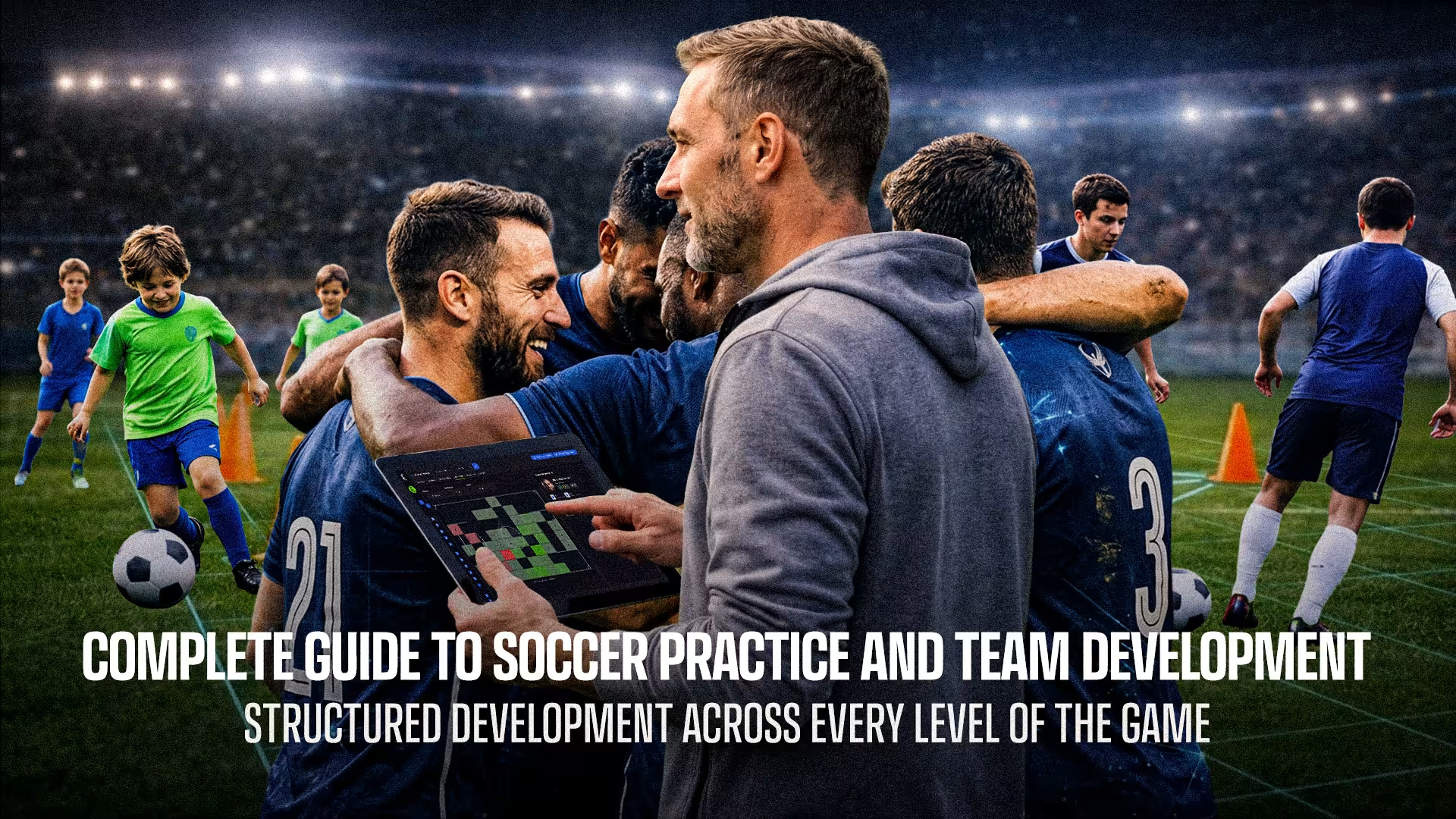
The Role of Soccer Practice Plans
Soccer practice plans are not just about organizing drills. They create structure, direction, and purpose within training. A well-designed plan ensures players develop technically, physically, and mentally while maintaining consistency across sessions.
Effective planning allows coaches to track progress, maintain intensity, and align training with match objectives. Over time, structured practice becomes the foundation for long-term player and team development.
Age-Based Practice Planning
At the early stages, training should focus on enjoyment and engagement. For players between under-5 and under-8, sessions should feel like play rather than structured training. The goal is to build confidence, coordination, and a natural connection with the ball without over-coaching or complexity.
As players move into the under-10 and under-12 categories, training begins to introduce technical structure. Ball control, passing fundamentals, and spatial awareness become key. Small-sided games help players develop confidence while gradually understanding positioning and teamwork.
At the youth level, particularly under-14 and under-16, the focus shifts toward tactical understanding and physical development. Players begin to refine their roles, improve decision-making under pressure, and build the physical capacity required for competitive football. Training becomes more structured, with a clear link between sessions and match performance.
Team Building in Football
Team building is essential for translating individual quality into collective performance. Strong teams are built on communication, trust, and shared understanding, both on and off the pitch.
On-field activities such as small-sided games, passing variations, and competitive drills naturally build coordination and decision-making. Off-field interactions, including workshops and group challenges, strengthen relationships and create a unified team environment.
Consistent team-building efforts improve communication, reduce errors under pressure, and create a culture where players support each other in high-intensity moments.
Designing Effective Training Sessions
Football training sessions must balance technical, tactical, and physical components. A typical session includes structured warm-ups, skill-based drills, tactical exercises, and match-like scenarios.
For younger players, sessions remain simple and engaging, focusing on ball interaction and movement. As players grow, training becomes more detailed, introducing tactical frameworks, positional play, and decision-making under pressure.
Indoor training environments, such as futsal-style sessions, add another layer to development. The reduced space increases tempo, forcing players to think faster, execute quicker, and improve close control.
Coaching in the Modern Game
Coaching today is no longer based only on observation and experience. The best environments combine subjective understanding with objective insights.
Top clubs increasingly rely on data to evaluate performance, adjust training intensity, and identify areas for improvement. Coaches are able to move beyond assumptions and make decisions backed by measurable patterns.
For younger age groups, coaching still prioritizes enjoyment and confidence. At advanced levels, it evolves into structured development driven by clarity, communication, and performance tracking.
Where StepOut Fits In
Modern training demands more than just planning—it requires feedback and clarity. This is where StepOut adds value.
By converting match and training video into structured performance insights, StepOut helps coaches understand how their sessions translate into real-game actions. Coaches can identify patterns, measure improvement, and adjust training with greater precision.
Instead of relying purely on intuition, training becomes measurable, repeatable, and aligned with tactical goals. This allows coaches to design smarter sessions and build more effective team environments over time.
Conclusion
Strong football teams are not built randomly. They are developed through structured planning, consistent training, and meaningful team-building efforts.
As the game evolves, the integration of data and analytics is becoming essential. Platforms like StepOut enhance traditional coaching methods by adding clarity, efficiency, and measurable outcomes.
The result is a more complete approach to development—one where players improve faster, teams perform better, and coaches make more informed decisions.
Frequently Asked Questions
Why are soccer practice plans important?
They provide structure to training, ensuring consistent development across technical, tactical, and physical areas.
What are effective team-building activities in football?
Activities that improve communication, trust, and coordination—both on and off the pitch—are the most effective.
What does a football training session include?
A balanced session includes warm-ups, technical drills, tactical exercises, and game-based scenarios.
How does StepOut help improve training sessions?
StepOut provides performance insights from video, helping coaches evaluate how training translates into match situations and adjust sessions accordingly.
How is indoor soccer different from outdoor soccer?
Indoor soccer is played in tighter spaces with higher intensity, requiring quicker decisions, better control, and faster execution.
.png "The World Cup Moments That Defined Generations")