StepOut
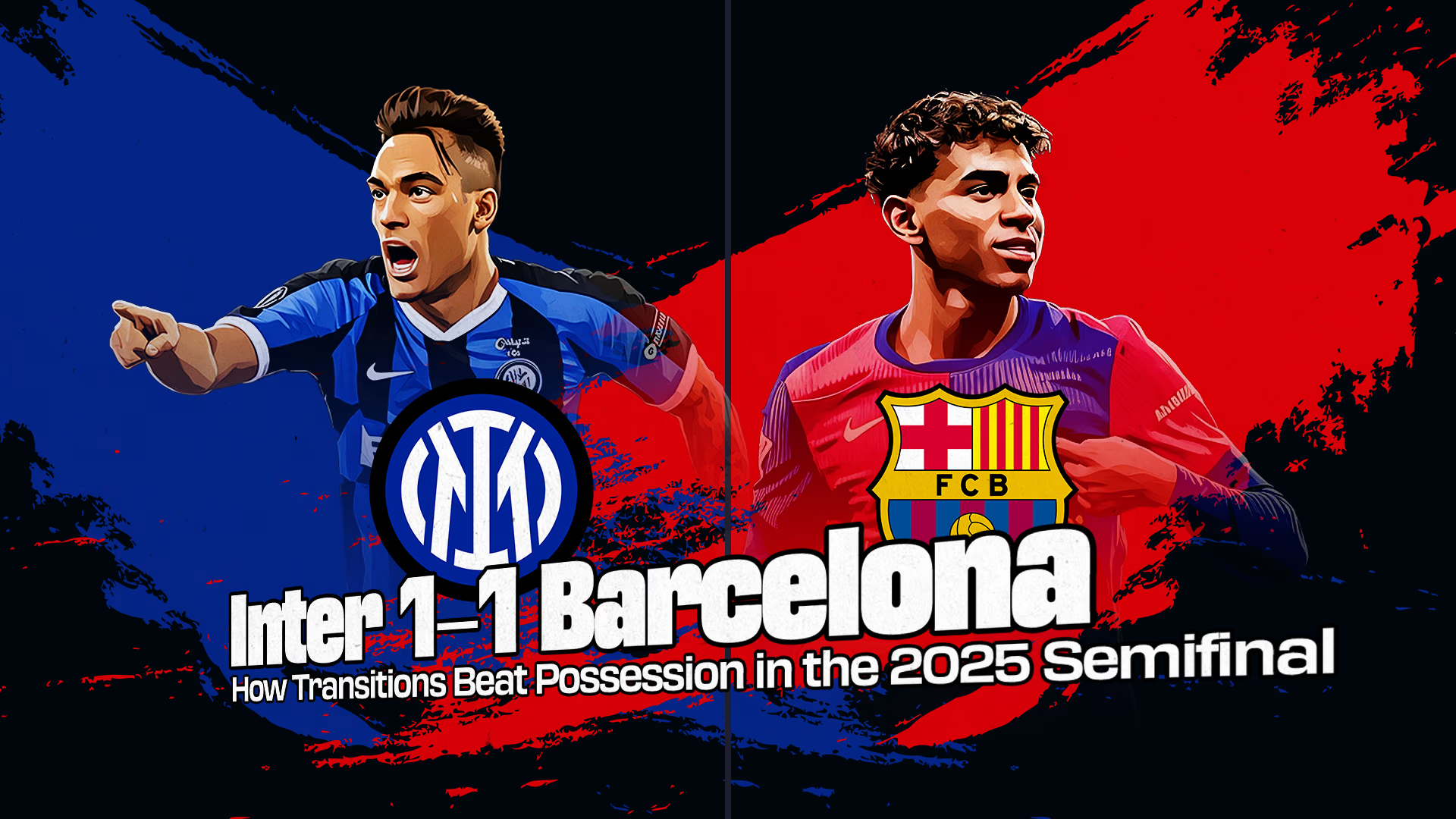
Inter Milan vs Barcelona: When Transitions Trumped Possession
Tactical Analysis

Inter Milan vs Barcelona: When Transitions Trumped Possession

Champions League Semifinal, Second Leg, 2025

2 min read

1. Calculated Press, Positional Traps

1. Calculated Press, Positional Traps

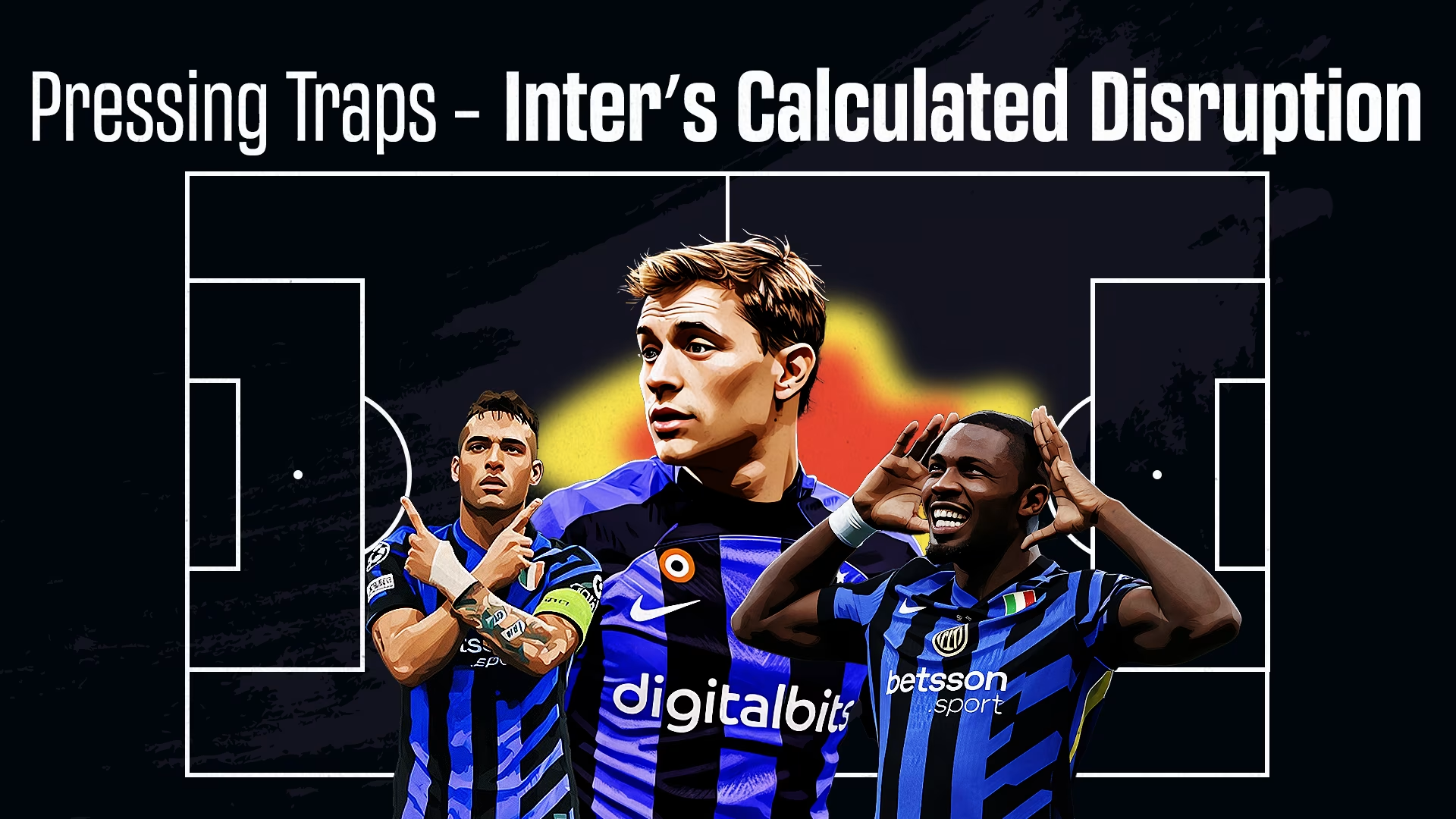
From the outset, Inter implemented a well-orchestrated pressing strategy. Nicolò Barella disrupted Barcelona's build-up by cutting off passing lanes, while forwards Marcus Thuram and Lautaro Martínez executed synchronized presses, narrowing angles and forcing hurried decisions. Even when Barcelona bypassed the initial press, Inter's forwards remained high, facilitating swift transitions. Wingbacks Denzel Dumfries and Federico Dimarco provided width and depth, crucial in stretching Barcelona's defense.

Key Stats:

Inter's pressing led to 5 interceptions in the attacking third, Dumfries contributed 2 goals in the first leg, highlighting his offensive impact.

2. Vertical Transitions, Central Play
2. Vertical Transitions, Central Play

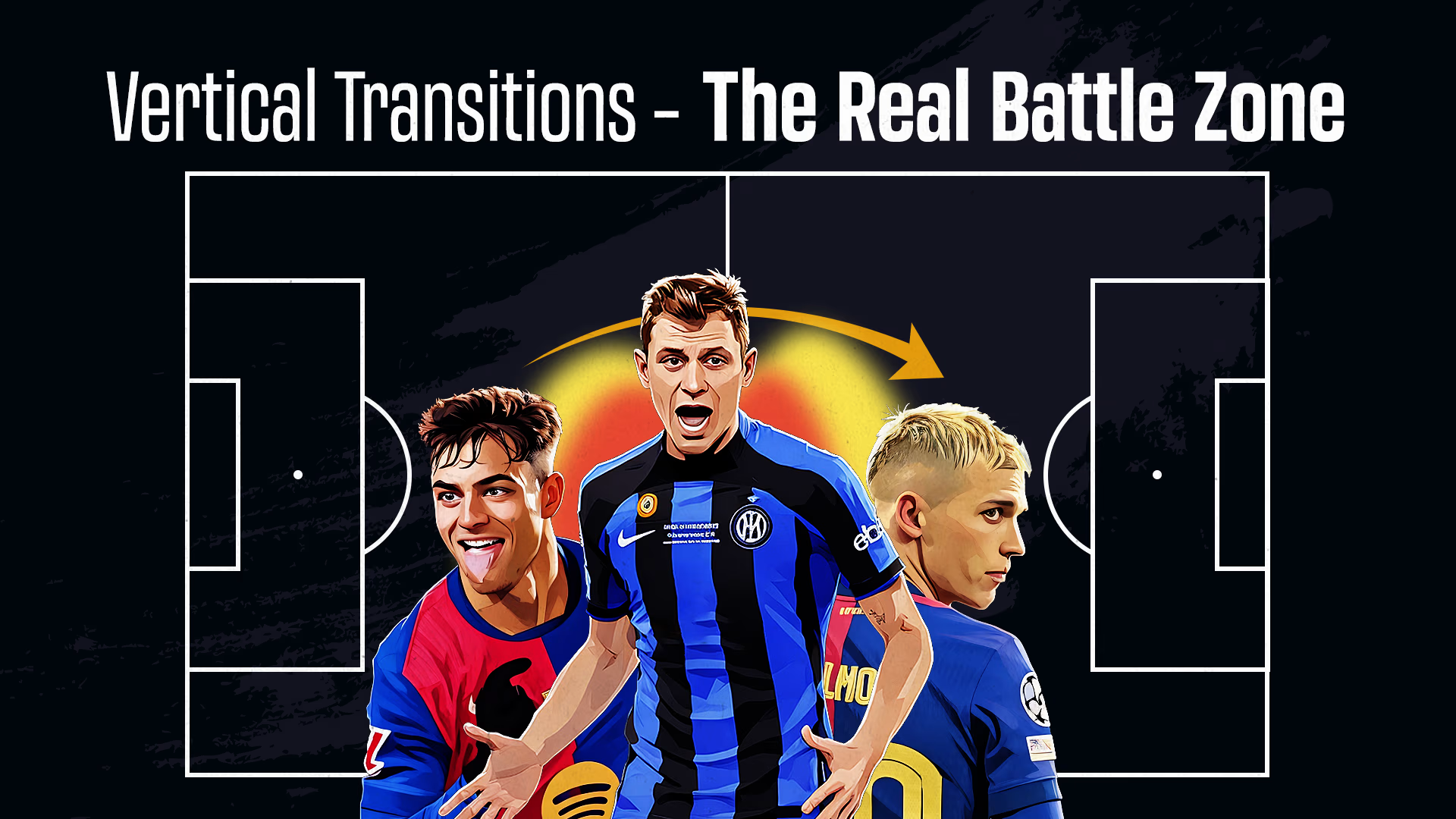
Both teams emphasized quick vertical transitions upon regaining possession. Inter exploited spaces left by Barcelona's advanced fullbacks, while Barcelona aimed to overload central areas with tight passing triangles. This approach created an open, high-stakes dynamic where control of transitions dictated the match's rhythm.

Key Stats:

Barcelona completed 721 passes, with Pedri accounting for 103, the highest among midfielders, Inter's direct play resulted in 3 goals from counter-attacks over both legs.

3. Second-Half Adjustments, Individual Brilliance
3. Second-Half Adjustments, Individual Brilliance

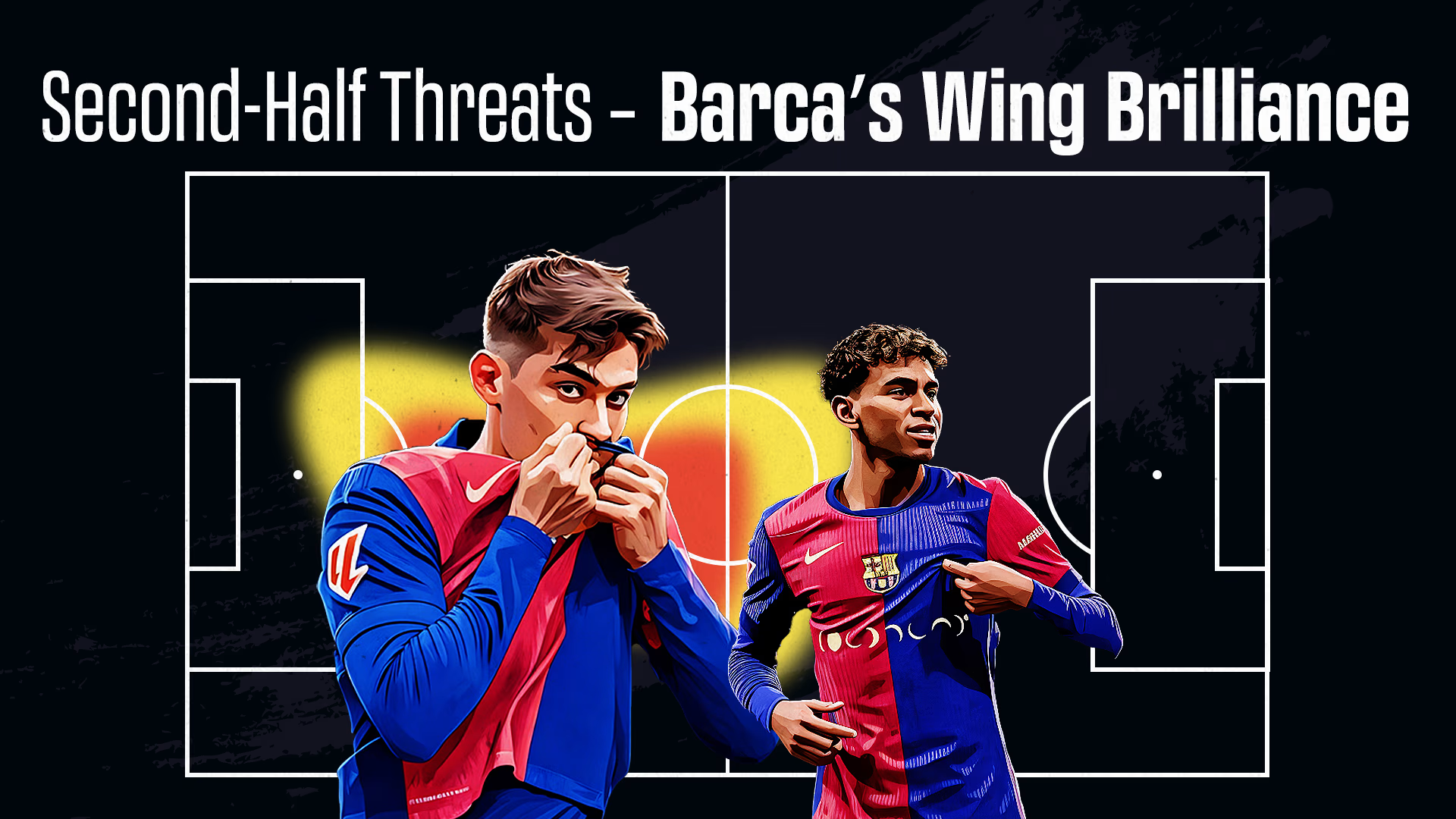
In the second half, Barcelona's left-back Gerard Martín capitalized on spaces left by Dumfries, delivering multiple threatening crosses. Lamine Yamal's dynamic dribbling on the right wing forced Inter to adjust defensively, showcasing Barcelona's individual talent and unpredictability.

Key Stats:

Martín recorded 129 touches, the second-highest in the match, Yamal completed 14 dribbles, the most in the game.

4. Inzaghi’s Tactical Flexibility
4. Inzaghi’s Tactical Flexibility

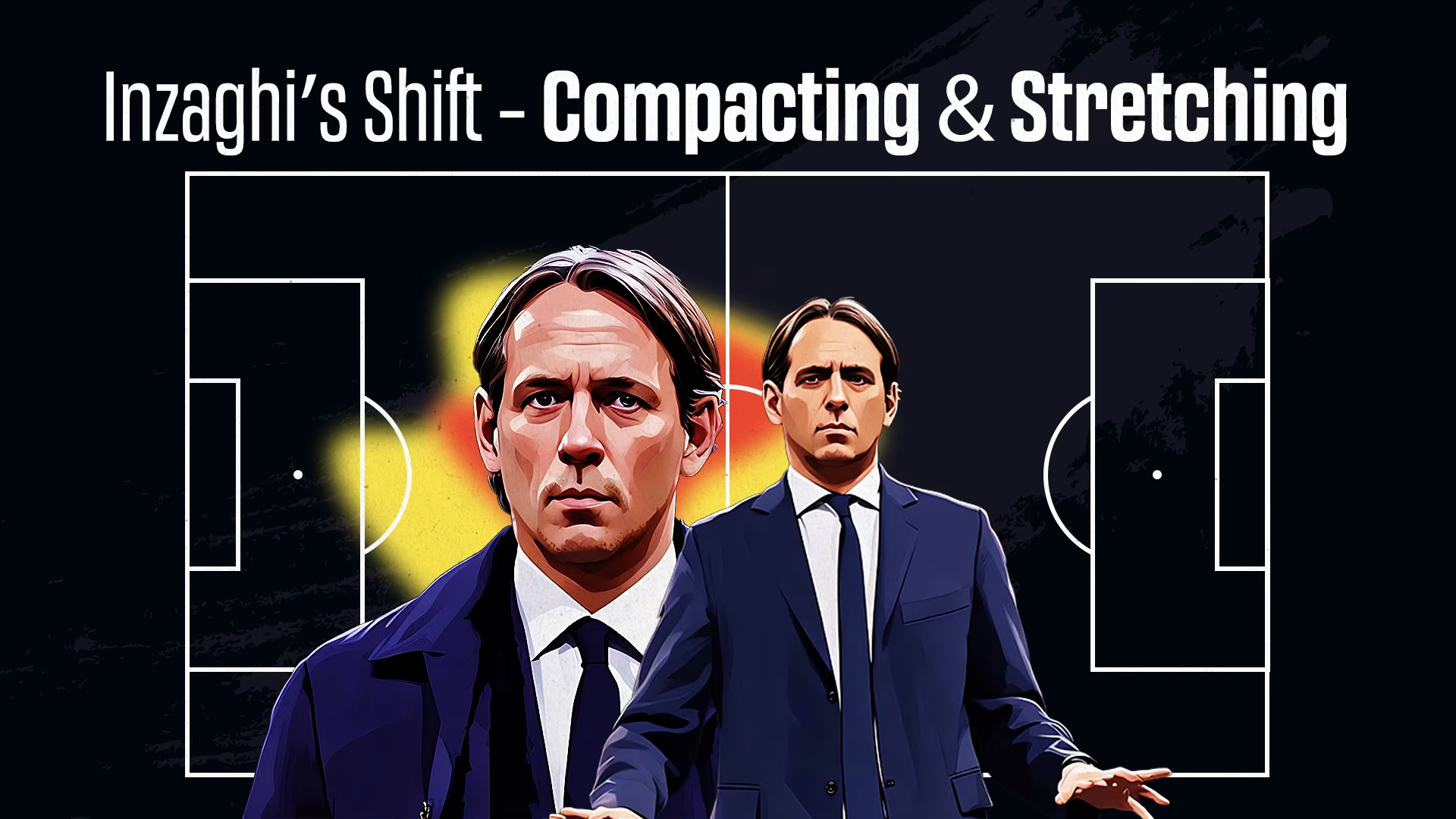
A pivotal moment came when Simone Inzaghi altered Inter's defensive shape. Dumfries pushed higher, the right center-back moved wide, and the defense compacted horizontally. This adjustment stretched Barcelona's formation, creating exploitable spaces. Inter capitalized on these, particularly through quick combinations between Dimarco and Henrikh Mkhitaryan.

Key Stats:

Inter's tactical shift led to 2 goals in the final 15 minutes, including the extra-time winner, Dimarco completed 3 key passes post-adjustment.

5. Mental Composure, Tactical Discipline
5. Mental Composure, Tactical Discipline

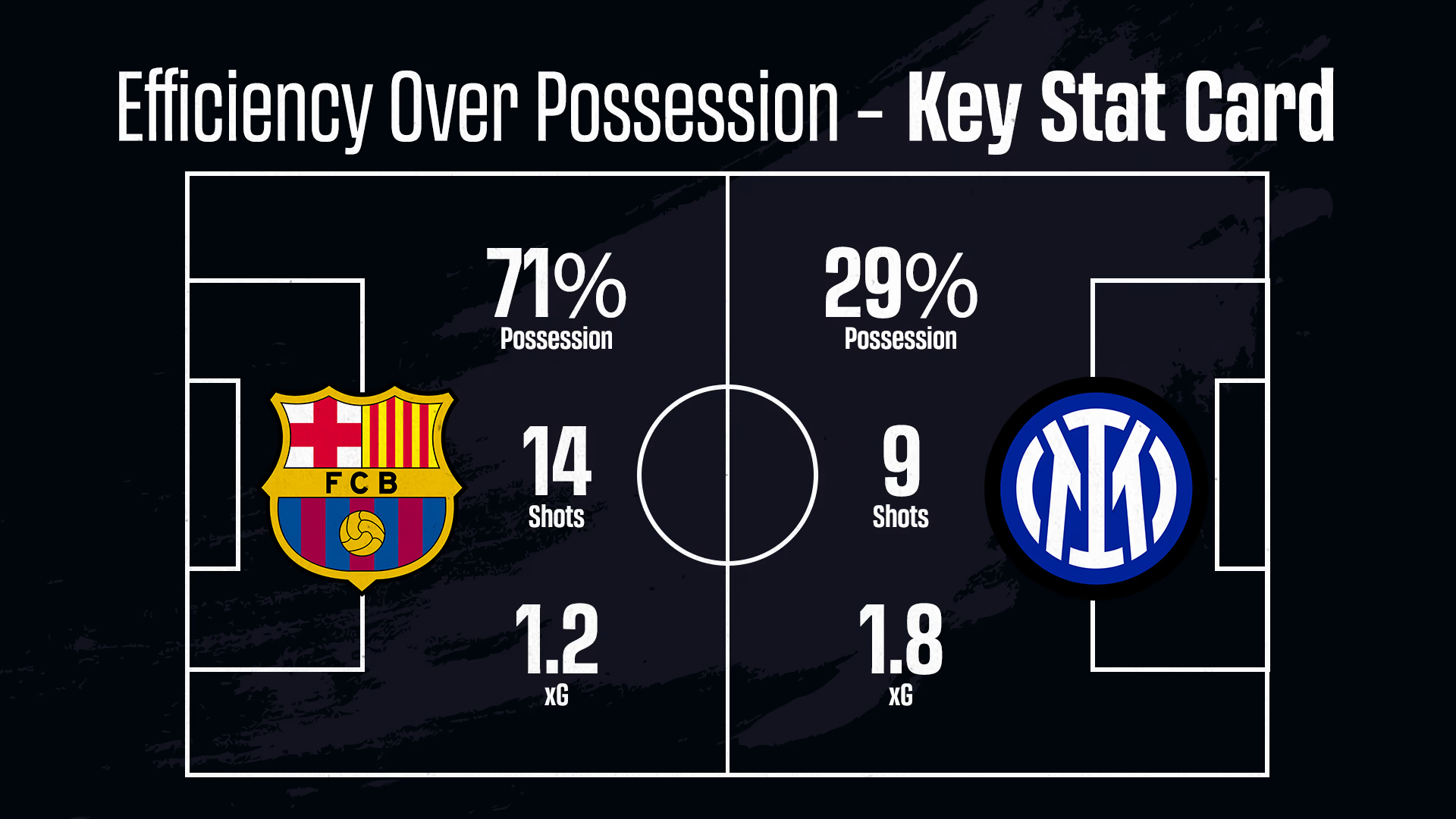
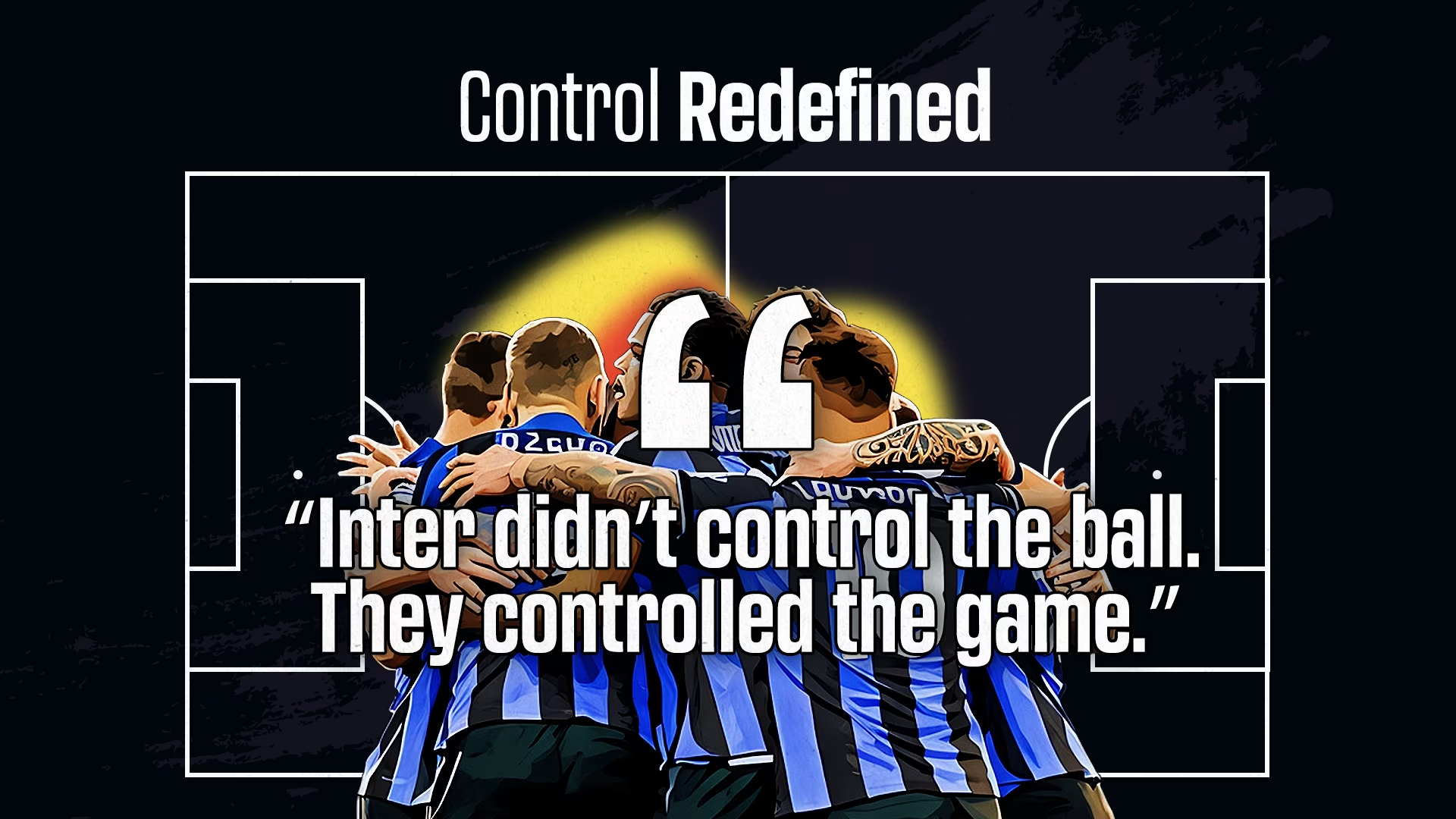
Despite Barcelona's possession dominance, Inter displayed remarkable composure. Their low-possession strategy was deliberate, drawing Barcelona in and exploiting spaces on the counter. Inter's tactical clarity and spatial awareness were instrumental in managing the game's emotional rhythm.

Key Stats:

Inter had 28.5% possession but managed 7 shots, with 4 on target, Goalkeeper Yann Sommer made 8 crucial saves, including a pivotal stop against Yamal in extra time.

Conclusion: Inter’s Mastery of Moments
Conclusion: Inter’s Mastery of Moments

This semifinal served as a testament to the power of tactical discipline and efficient transitions. While Barcelona showcased moments of individual brilliance, they couldn't consistently penetrate Inter's well-structured system. Inter's victory wasn't merely about defending deep, it was about understanding when and how to strike. In an era where possession is often equated with dominance, this match highlighted that strategic decisiveness in transitions can be the true determinant of success.

Blog

Sideline Stories - Check Out What's Happening

View All Articles
Soccer Analytics6 min read

What Should a Technical Director Look for in a Soccer Analytics and Scouting Platform?

Choosing soccer technology has become a much bigger decision for modern clubs, with different priorities, perspectives, and factors to take into account. A Technical Director may be looking for better match analysis, a Head of Scouting may want a faster way to benchmark players, while the coaching staff needs opposition reports before the next fixture. Meanwhile, academy staff need a practical way to track player development across the pathway. The problem begins when different departments rely on different tools. Match footage sits in one system, tagged events in another, scouting reports in spreadsheets, and performance data with a separate provider. By the time that information reaches a recruitment or coaching meeting, staff can spend more time bringing it together than actually using it. The challenge, then, goes beyond finding good software. The right platform should give the soccer department a shared view of the information and make it easier to move from raw data and video to informed decisions. This is where a modern soccer analytics platform can add real value. This guide looks at the key areas Technical Directors, Sporting Directors and soccer operations teams should consider when evaluating soccer video analysis software, soccer analytics platforms and soccer scouting software.

The World Cup Moments That Defined Generations
World Cup4 min read

The World Cup Moments That Defined Generations

Every FIFA World Cup crowns a champion, but history rarely remembers a tournament only because of who lifted the trophy. Instead, it remembers the moments that changed soccer forever. A stunning upset, a moment of brilliance, a heartbreaking miss, or an underdog rewriting history often becomes the true legacy of a World Cup. These moments transcend results and generations, becoming stories that fans continue to relive decades later. From Paolo Rossi's remarkable redemption in 1982 to Morocco's groundbreaking run in 2022, every tournament has left behind a defining chapter that shaped soccer's greatest competition. As the FIFA World Cup continues to evolve, these unforgettable moments remind us why it remains the biggest stage in world soccer.

Soccer Legends at Their Final World Cup
World Cup3 min read

Soccer Legends at Their Final World Cup

Every World Cup marks the beginning of new stars and the farewell of old ones. The 2026 FIFA World Cup is expected to be the final tournament for several players who have shaped modern soccer for nearly two decades. From World Cup winners and Ballon d'Or recipients to captains who inspired entire nations, these legends have left an unforgettable mark on the sport. As a new generation prepares to take over, this tournament offers one final opportunity to watch some of soccer's greatest names compete on the biggest stage. Here are the players most likely to be making their last World Cup appearance.

Curious How This Would Work?

Access in-depth performance data, tactical intelligence, and AI-driven match insights for your team.

WhatsApp