
How AI Scouting and Player Valuation Platforms Reduce Transfer Risks
Smarter Recruitment
Why Transfer Recruitment Carries So Much Risk
A transfer decision involves far more than identifying a talented soccer player. Clubs are assessing whether a player can reproduce their performances at a different level, adapt to a different tactical system, handle increased expectations and contribute consistently enough to justify the financial commitment.
The cost of getting that decision wrong can extend well beyond the transfer fee. Wages, agent fees, signing costs, squad registration, opportunity cost and a potential loss in resale value can all increase the financial impact of a poor signing, which is often why recruitment teams increasingly combine scouting expertise with data and video analysis.
Brighton and Brentford provide two well-known examples of clubs building recruitment strategies around data. Brighton has used proprietary data algorithms to support recruitment, while Brentford has developed a data-led approach to player identification and squad planning. It provides a clear sign of how recruitment becomes more effective when clubs systematically search for evidence rather than relying on reputation alone. The same principle can be applied by clubs operating with considerably smaller recruitment budgets.
How AI Is Changing Player Scouting
An AI scouting platform can process and organise far more performance information than a recruitment team could realistically review manually. Instead of spending hours searching through individual matches, analysts can use technology to identify relevant actions, compare performances and build a more complete picture of a player.
For recruitment teams, this can help with:
AI therefore becomes most valuable when it helps recruitment teams move from a large pool of potential players towards a shortlist supported by evidence. It also creates an opportunity to combine quantitative and visual analysis. A statistic can show what happened; video can help explain how and in what context it happened.
- Identifying players who match specific positional or tactical requirements
- Comparing players across matches and competitions
- Reviewing individual actions rather than relying solely on aggregate statistics
- Finding potential targets beyond familiar leagues and markets
- Creating player profiles that combine performance information with video evidence
- Reducing the manual workload involved in initial player screening
Player Statistics and Player Evaluation
A player's headline numbers rarely tell the complete recruitment story. A striker's goals, for example, can look impressive until the recruitment team examines shot volume, shot quality, chance creation, involvement in build-up play and the quality of opposition. A midfielder's passing percentage can appear strong while hiding whether those passes actually move the team forward.
This is where player evaluation tools become particularly useful.
A stronger evaluation process can bring together:
This approach is particularly important when clubs are scouting players from different leagues, as context is always crucial. A player performing well in one competition may have very different responsibilities, teammates, opposition quality and tactical demands compared with the environment they would enter after a transfer.
Data-led recruitment has already demonstrated the value of searching for players who may be undervalued by the wider market. Clubs like Brighton and Brentford approach recruitment with the backing of statistical analytics to identify players who could offer value that conventional recruitment might overlook.
- Match and player statistics
- Positional and tactical information
- Individual actions
- Video evidence
- Performance trends
- Comparisons with other players
- Player-specific visual reports and infographics
Where Player Valuation Platforms Add Value
The phrase player valuation platform can mean different things in soccer. For some clubs, valuation is primarily a financial exercise based on market conditions, age, contract length and comparable transfers. For recruitment teams, however, valuation also starts with understanding what a player can actually contribute.
That makes player evaluation an important part of the wider valuation process.
Before deciding whether a player is worth a particular transfer fee, clubs need a reliable understanding of:
Performance: What is the player producing consistently?
Role: What responsibilities does the player perform and how closely do they match the club's requirements?
Level: How transferable are those performances to the target competition?
Fit: Can the player contribute within the team's existing tactical structure?
Potential: Is there scope for the player's value and contribution to increase?
Risk: Which areas require further investigation before a commitment is made?
A data-rich recruitment process gives decision-makers more evidence for these questions. It can support the conversation around whether a player represents value rather than allowing the transfer fee itself to become the starting point.
What Clubs Should Look for in Recruitment Technology
Choosing player recruitment software should begin with the decisions the club needs to improve. A useful recruitment system should help connect scouting, analysis and decision-making.
For club owners and sporting directors, important capabilities include:
Comprehensive player information
Recruitment teams need access to detailed player data that can be understood quickly and compared against relevant benchmarks.
Video and data together
Performance numbers become more useful when analysts can connect them with the actual actions behind those numbers.
Player-specific reporting
Clear player profiles, visual reports and infographics can make complex performance information easier for coaches, scouts and decision-makers to interpret.
Faster shortlisting
The technology should reduce the time spent collecting and organising information, allowing recruitment teams to spend more time assessing whether a player is suitable.
Scalable scouting
A modern player recruitment platform should make it possible to evaluate larger pools of players without requiring the recruitment department to expand its manual workload at the same rate.
The best player recruitment tools ultimately support better questions. They give decision-makers more evidence before a shortlist becomes a negotiation and before a negotiation becomes a transfer.
How StepOut Supports Smarter Recruitment
StepOut approachessoccer analysis through AI-powered performance data and video analysis, turning match footage into structured insights that coaches, analysts and recruitment teams can use.
StepOut combines player and team analysis with detailed match reports, pre-tagged video libraries, player feedback, opposition analysis and player development tracking, while also providing player profiles, scouting reports, and comparative analysis.
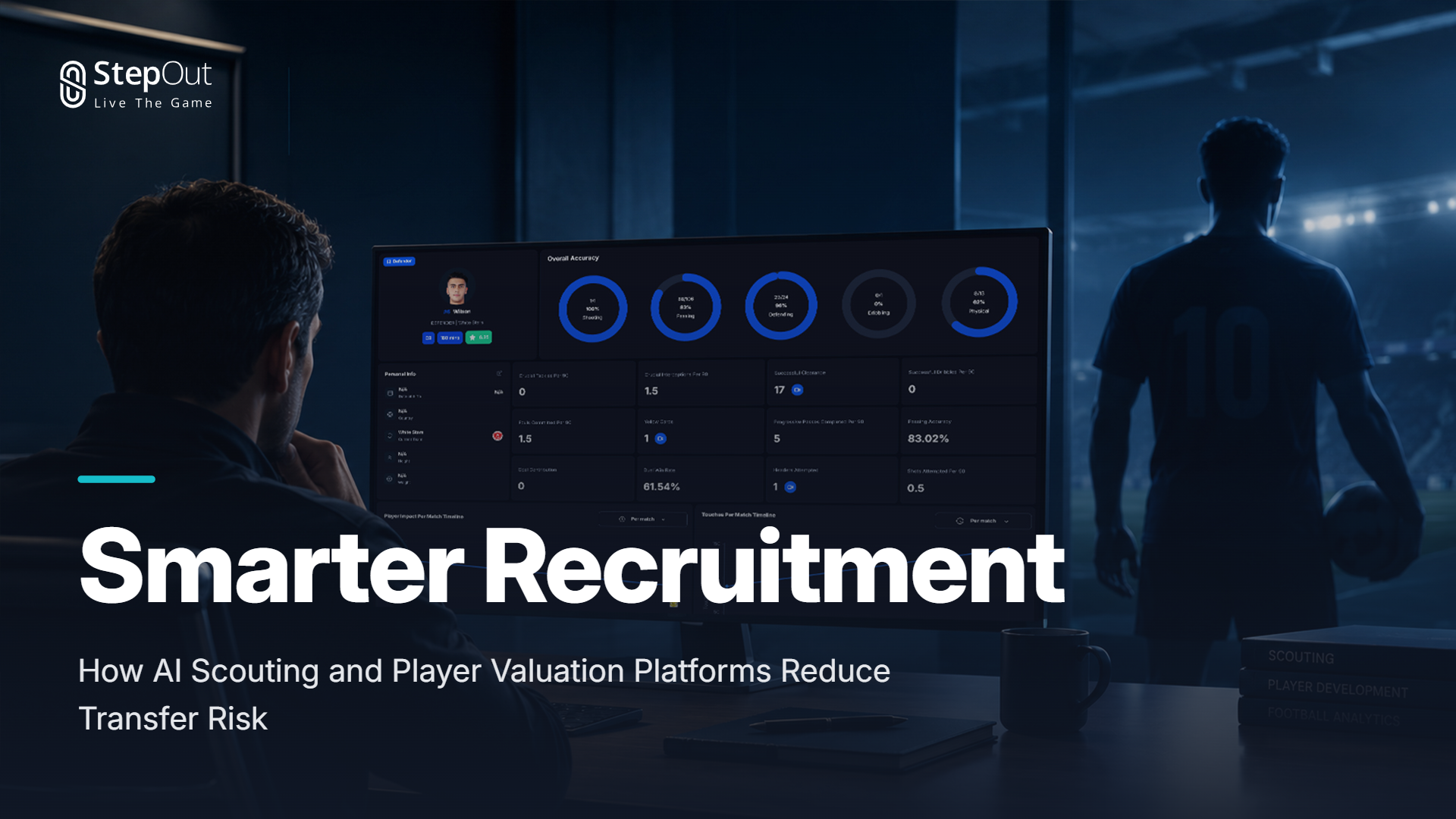
The Scouting Portal supports the talent identification stage, helping clubs discover players and bring their performances into the recruitment process. Once a player is identified, the Player Summary provides a focused view of their performance, bringing key statistics and relevant match information together so scouts and clubs can assess a player without having to work through disconnected data points.
On the other hand, SenseVS within StepOut TMS allows you to compare multiple players. Scouts can benchmark players in the same position and identify where a prospect stands against the standards already established within the team.
Together, these tools can make the recruitment process more efficient and evidence-led. Data helps narrow the search, player summaries provide context, and direct comparisons show how a potential signing measures up against the players already in the squad.
The final decision still requires the experienced eye, an understanding of the team's playing model and consideration of factors that performance data alone cannot capture. StepOut provides the evidence to make that judgement with greater confidence.
Frequently Asked Questions
What is an AI scouting platform in soccer?
An AI scouting platform uses artificial intelligence, machine learning, data and video analysis to help clubs identify, evaluate and compare soccer players. It can automate parts of the scouting process and surface performance information that would be difficult to analyse manually at scale.
How can AI reduce transfer risk?
AI can help clubs evaluate more players, compare relevant performance indicators, identify potential weaknesses and connect statistical information with video evidence. This gives recruitment teams more evidence before making a transfer decision and can reduce reliance on limited observations or reputation.
What is soccer transfer analytics?
Soccer transfer analytics applies data and analytical methods to recruitment and transfer decisions. It can involve assessing player performance, tactical suitability, development potential, market opportunities and other factors that influence whether a player represents good value for a club.
Can a player valuation platform guarantee a successful transfer?
A player valuation platform can strengthen the evidence behind a decision, helping clubs understand a player's performance and potential before making a financial commitment.