

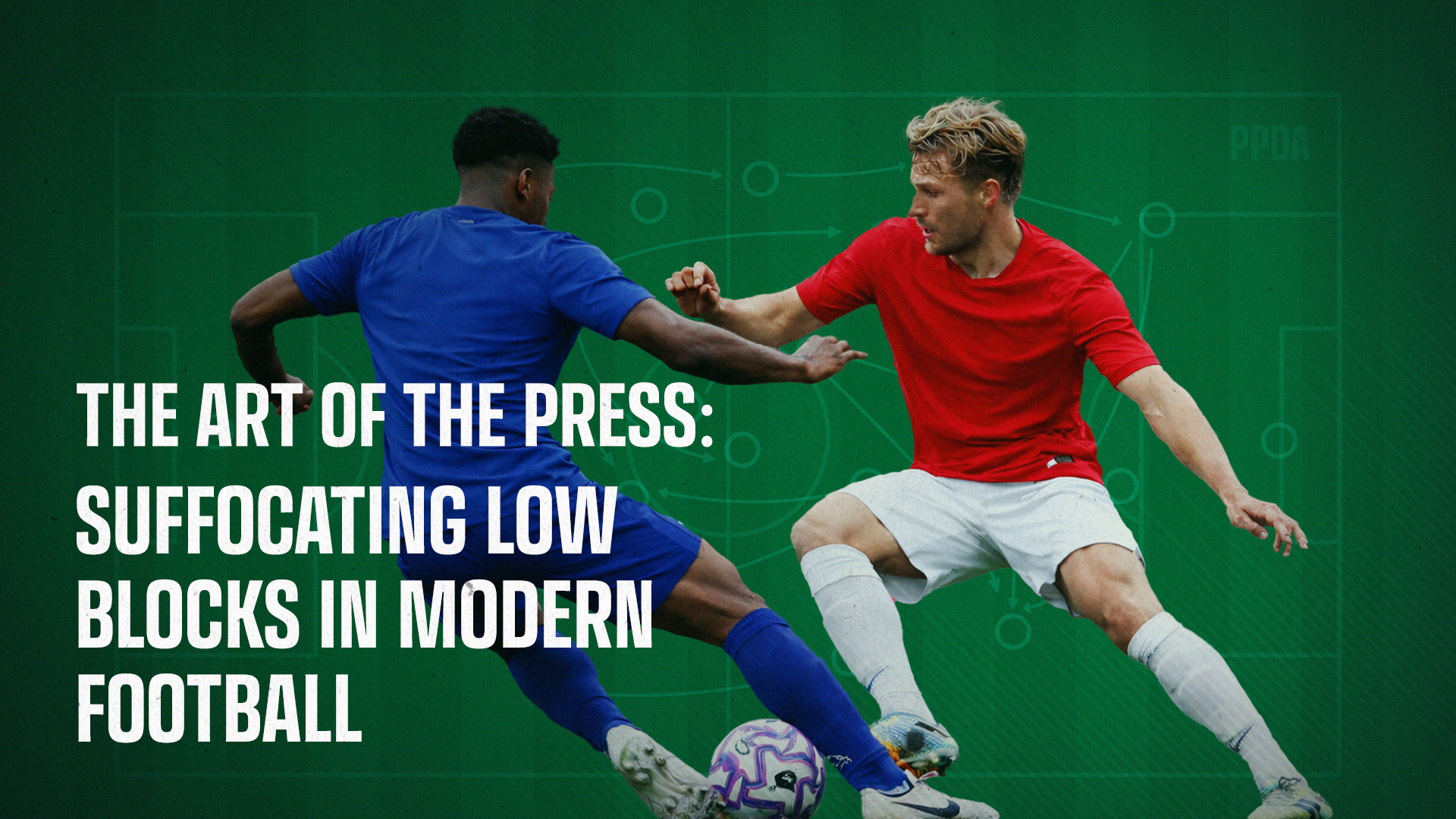
Pressing as a Modern Game Model Principle
Pressing is no longer about emotional intensity; it is about coordinated structure and spatial control. Teams like Liverpool FC have demonstrated how reducing opponent build-up time can dictate territorial dominance and transition frequency. Modern football analytics measure pressing efficiency not only through ball recoveries, but through forced errors, territorial gains, and immediate expected threat after regains.
PPDA and the Measurement of Intensity
PPDA (Passes Per Defensive Action) has become the benchmark metric for evaluating pressing intensity. During the 2024–25 campaign under Arne Slot, Liverpool recorded a league-low PPDA around 9, indicating defensive intervention before opponents could establish rhythm. AI football analytics now layer PPDA with positional data to assess pressing traps, reaction timing, and compactness between lines.
Tactical Refinement in the 2025–26 Season
Pressing systems this season reflect greater tactical balance between aggression and control. FC Bayern Munich have paired structured high pressing with dominant possession phases, while Arsenal FC alternate between intense high pressure and compact mid-block organization. This shift illustrates how elite teams prioritize intelligent pressing triggers over constant physical output.
Pressing Triggers and Spatial Coordination
Elite pressing is activated through specific cues such as backward passes, heavy first touches, closed body orientation, and lateral passes near the touchline. The counter-pressing philosophy popularized by Jürgen Klopp emphasizes immediate reaction within seconds of losing possession. Analytical tracking now evaluates trigger recognition speed, passing lane obstruction, and vertical compactness to quantify pressing success.
Zonal Pressing and Vertical Compactness
Different pitch zones require different pressing behaviours. High pressing in the attacking third increases the probability of regaining possession near goal but carries counter-attacking risk, while middle-third pressing provides structural balance and controlled defensive density. Maintaining vertical compactness of approximately 20–30 meters between lines ensures coordinated movement and reduces exploitable gaps during pressing sequences.
The Structural Challenge of the Low Block
Low block systems compress space in central and half spaces, limiting penetration and forcing opponents into low-probability actions. With defenders positioned near the penalty area and midfielders forming layered coverage, deep blocks eliminate space in behind and reduce central access. Tactical analysis shows that expected goals per shot decline significantly against compact defensive structures.
Breaking Defensive Bunkers Through Tactical Adaptation
To dismantle low blocks, teams rely on width occupation, rapid circulation, and third-man combinations to destabilize defensive density. Arsenal FC demonstrated adaptive flexibility against Manchester City by alternating pressing phases and mid-block organization, creating high-xG turnovers through selective pressing traps and transitional exploitation.
The StepOut Angle: Data-Driven Pressing Intelligence
Modern pressing battles demand measurable clarity. StepOut applies AI football analytics to map PPDA fluctuations, pressing zones, defensive compactness, and shot quality against low blocks, converting tactical behaviours into quantifiable insights. By aligning pressing strategy with spatial data and performance analysis, StepOut enables coaching teams to evaluate efficiency, refine structural balance, and develop sustainable solutions against both aggressive build-ups and defensive bunkers.
Frequently Asked Questions
What is PPDA in football analytics?
PPDA (Passes Per Defensive Action) measures pressing intensity by calculating how many passes a team allows before attempting a defensive action, making it a core metric in modern football analysis.
Why are low blocks effective against high pressing teams?
Low blocks compress space in central zones, forcing opponents into low-probability shots and reducing expected goals per attempt according to performance analytics.
How do elite teams break down defensive bunkers?
Teams use positional rotation, width occupation, overloads, and rapid circulation to destabilize compact structures, strategies supported by AI football analytics tracking spatial imbalances.
What are pressing triggers in tactical analysis?
Pressing triggers are cues such as backward passes or poor first touches that signal optimal moments to apply pressure, measurable through spatial and reaction-time data.
How does StepOut improve pressing analysis?
StepOut applies AI football analytics to evaluate pressing zones, compactness, and transition efficiency, transforming tactical pressing strategies into quantifiable performance insights.