

Arsenal’s Positional Control — And Its Limits
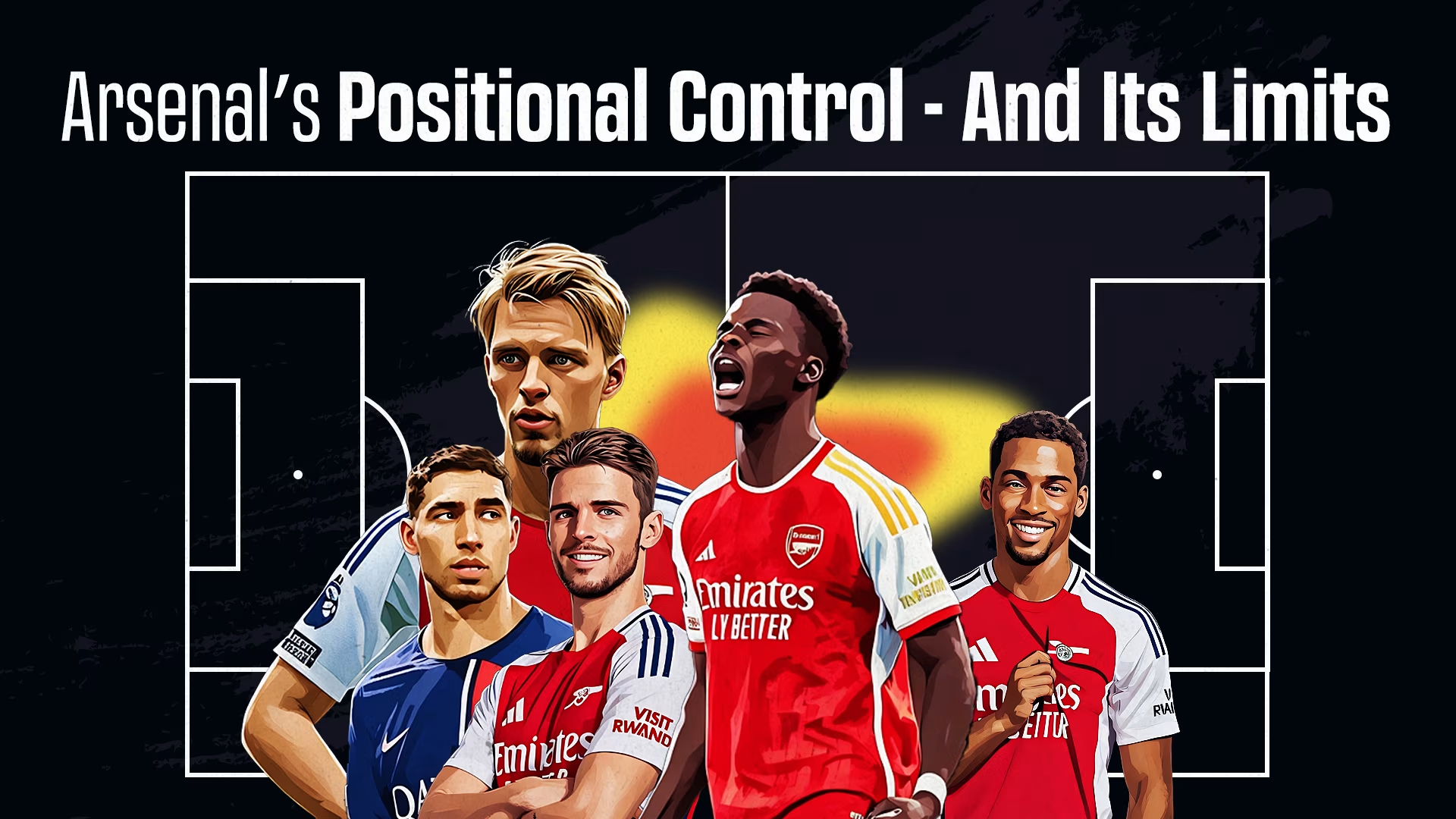
From the outset, Mikel Arteta’s plan was clear: take the ball, take the initiative, and try to break PSG with method and precision.
It worked… at first. 54% possession, with 548 completed passes and a strong rhythm to their build-up. Their wide combinations were sharp — Ødegaard drifting wide to overload with Saka, Martinelli isolating Hakimi on the left. Declan Rice and Ødegaard alternated pressing roles, disrupting PSG’s central midfield and forcing long balls. The numbers backed the eye test: 19 total shots, 3.14 expected goals (xG) — more than double PSG’s, 3. 6 shots on target, but only 1 goal, coming in the 80th minute from Bukayo Saka. Despite their control, Arsenal struggled in the final third. They created territory more than they created threat. Their wide overloads often fizzled into blocked crosses or low-percentage shots. As the game wore on, you could feel it: the structure was there, the sharpness wasn’t.
PSG’s Improv Blueprint — Asymmetry and Instinct
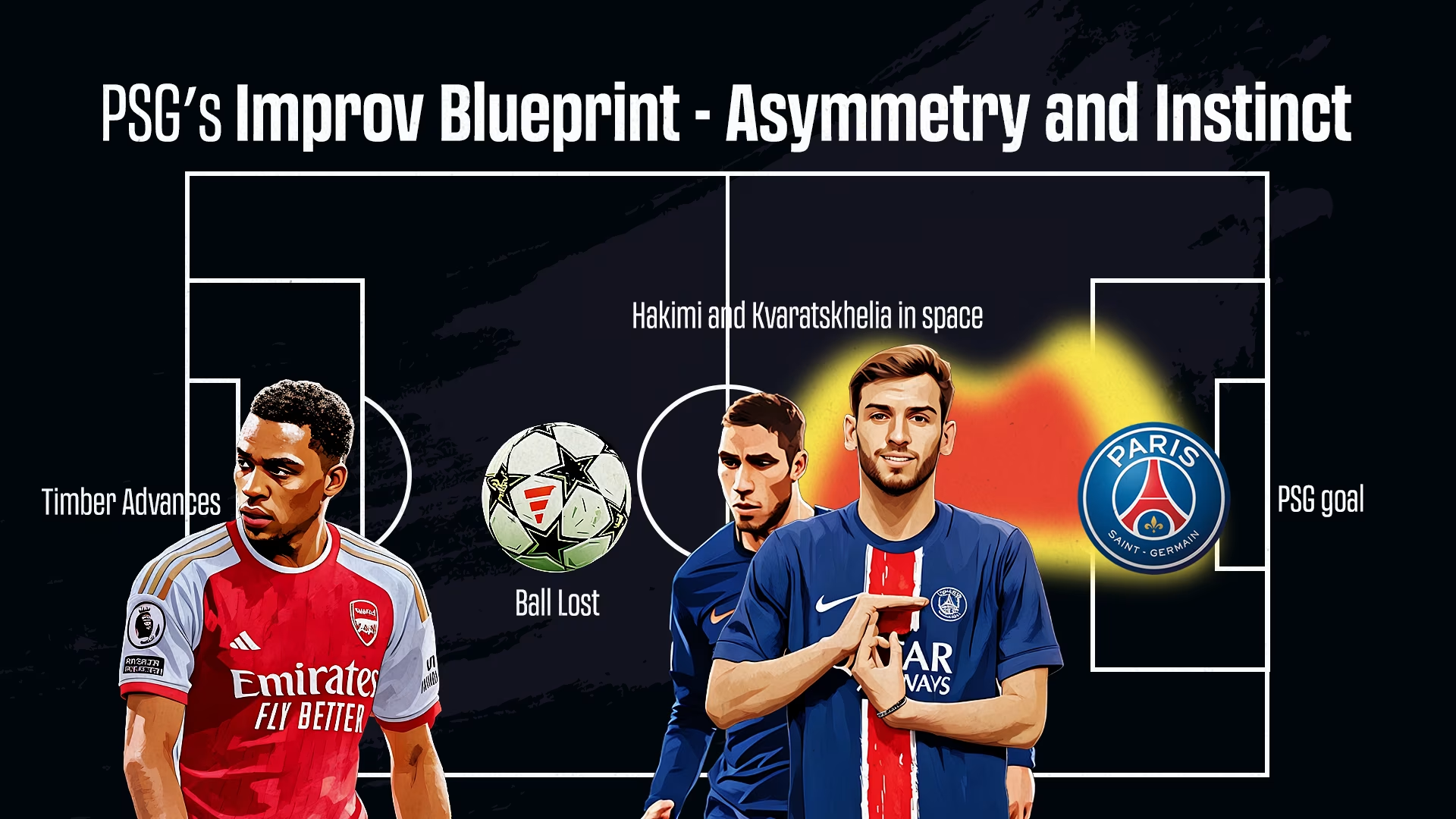
Luis Enrique didn’t aim to match Arsenal’s control. Instead, he let the match break shape — and trusted his players to win in transition.
PSG’s approach was fluid, unpredictable, and calculated in its chaos. Nuno Mendes tucked in, forming a situational back three during build-up. Achraf Hakimi pushed high and wide, stretching Arsenal’s left and opening pockets in midfield. Vitinha and Fabián Ruiz rotated constantly, making it hard for Rice or Partey to pin anyone down.
In transitions, PSG’s 4-3-3 morphed into a lopsided 4-2-4, setting traps and springing forward with pace. They didn’t generate as many chances — only 11 shots, with 1.17 xG — but they made them count. 61st minute: Fabián Ruiz pounced on a poor clearance and curled in a beautiful finish. 70th minute: A midfield turnover from Arsenal became a Hakimi underlap and a ruthless second. PSG weren’t dominant. But they were decisive.
Midfield Battle: Compactness vs Chaos
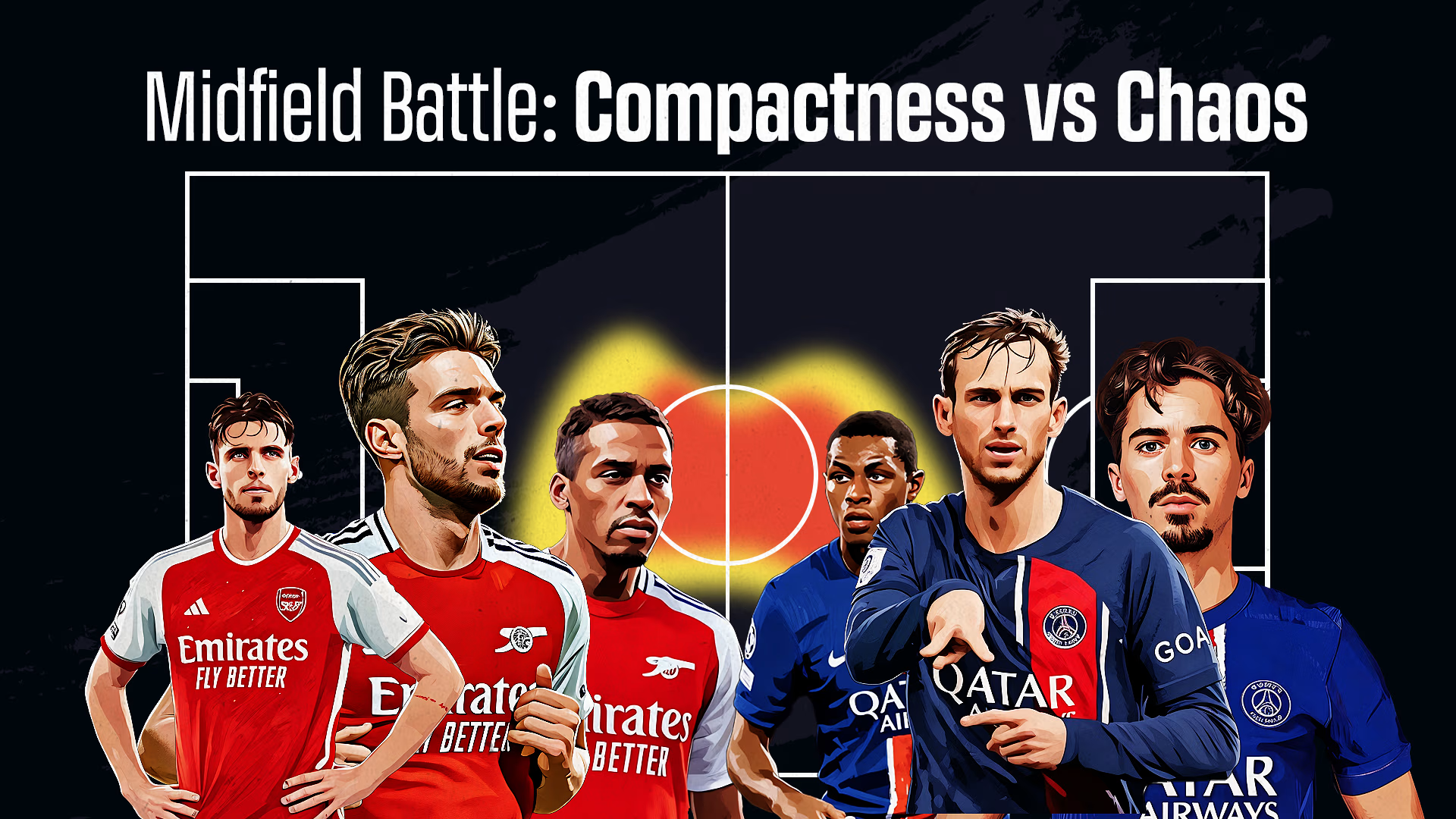
This match was defined in midfield — but not in the usual ways.
For Arsenal:
Rice and Ødegaard acted like a piston — one pressed, the other covered.
They stifled short build-up attempts and pushed PSG wide.
For 60 minutes, they were in control of the central zones. For PSG:
João Neves (21 years old!) quietly ran the show — 6 tackles, countless pressures, always available for the release.
Ruiz’s positioning constantly asked questions of Arsenal’s shape.
When PSG couldn’t go through Arsenal, they simply went around — bypassing the block with wide-to-central switches. PSG were never trying to win midfield. They were trying to move around it — and it worked.
Fine Margins, Ruthless Outcomes
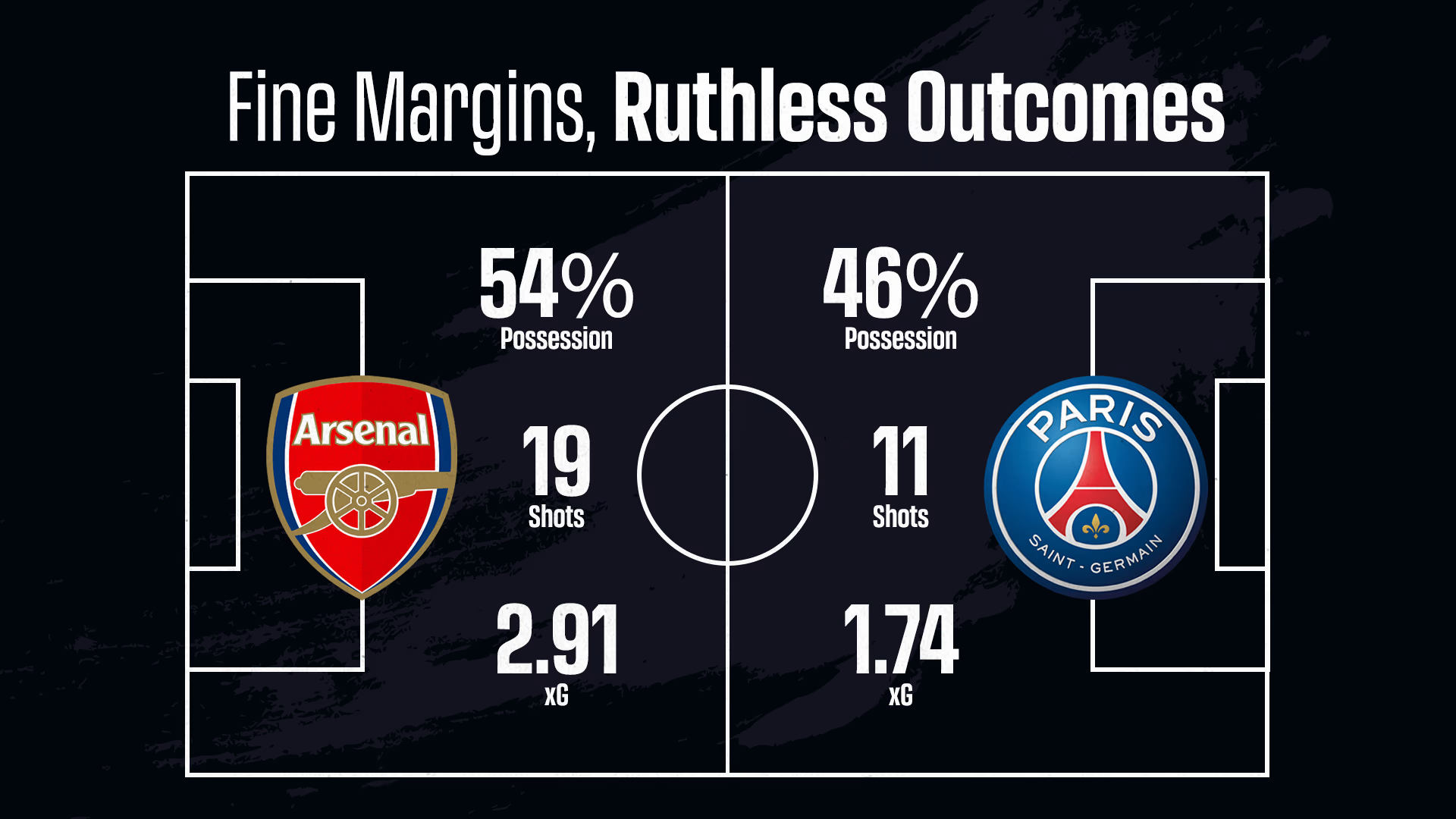
This wasn’t a match of dominance. It was a match of margins.
Arsenal had more passes, shots, and expected goals. PSG had fewer moments — but bigger ones. One lapse from Thomas Partey tracking back? One goal. One mistimed advance from Timber? Another goal. Arsenal were brilliant in building the narrative of the game. But PSG wrote the plot twists that mattered.
Conclusion: Why PSG’s Chaos Was Just Right
Luis Enrique’s system isn’t designed to keep everything under control. It’s designed to let his players take control when it matters most.
Hakimi, Ruiz, Neves, Vitinha — these aren’t robots following a script. They’re problem-solvers, each in their own way. PSG didn’t try to out-pass Arsenal. They waited for the right moments to out-think and out-run them. Arsenal were better on the chalkboard. But PSG were better in the mess. And that’s how you win semi-finals.